Christmas Tree Skirt Ideas That Hide the Stand
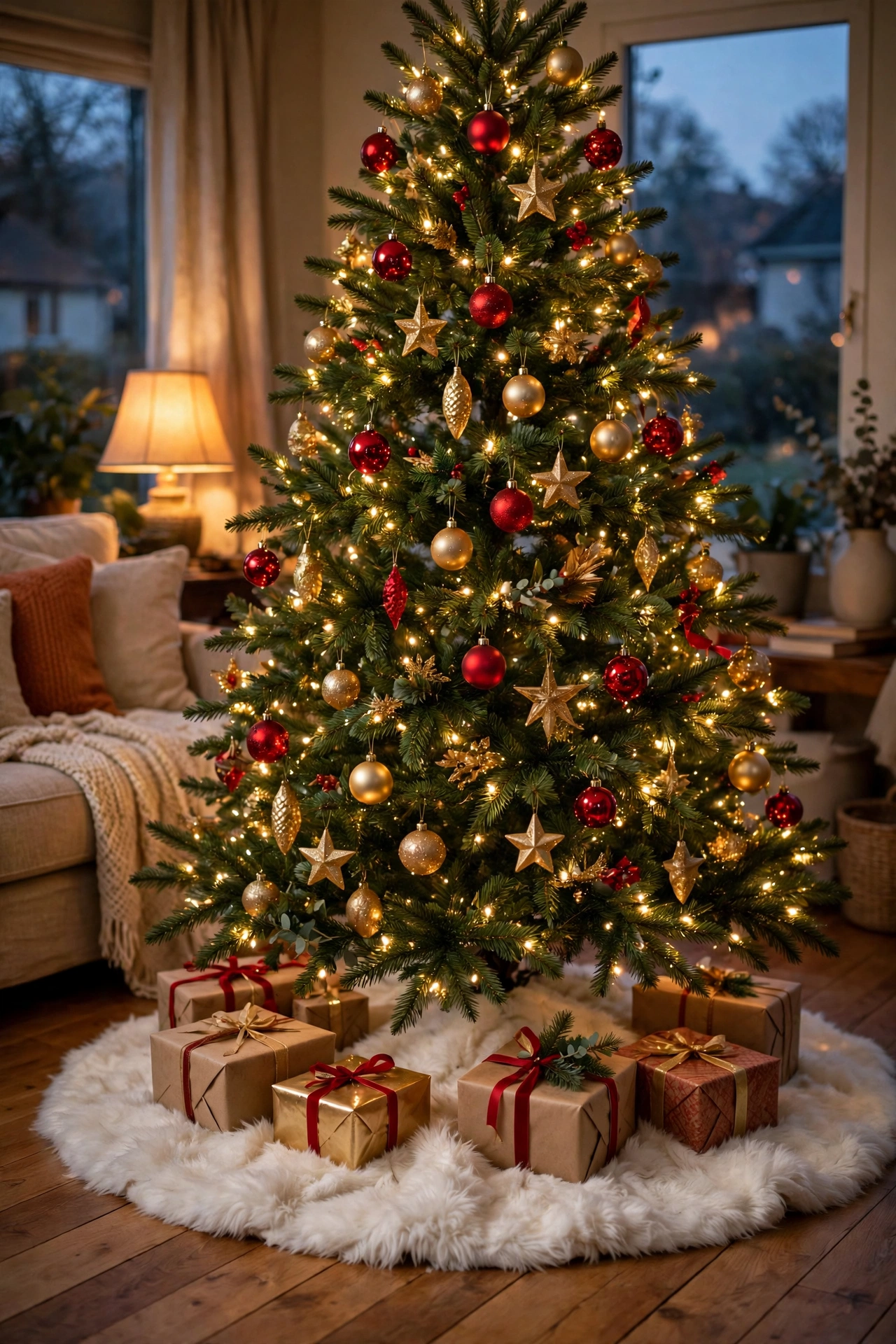
The tree is decorated, the lights are on, the ornaments are placed, and then you step back and see it. The metal stand. The tangle of light cords. The power strip on the floor. The bottom of the tree looks unfinished, and it breaks the magic that the rest of the tree works so hard to create. A Christmas tree skirt fixes that in one move. It hides the stand, it hides the cords, it catches the falling needles, and it gives the tree a finished base that makes the whole tree look deliberate instead of half done. Most people treat the skirt as an afterthought, and that is why so many trees look slightly wrong at the bottom. They buy the first skirt they see, in the wrong size, in a fabric that fights the rest of the tree, or they skip the skirt entirely and hope nobody looks down. The skirt is not an afterthought. It is the foundation of the tree, the same way a frame is the foundation of a painting. It sets the tone for everything above it, it gives the presents a place to sit, and it is the part of the tree that children and pets touch first. This guide starts with the sizing rule, because every good choice in Christmas tree skirt ideas follows from it. Then it covers the five families of skirts that actually work, the plush faux fur skirt, the chunky knit skirt, the velvet and quilted skirt, the rustic burlap skirt, and the tree collar that replaces a skirt altogether, plus the DIY tree skirts you can make in an afternoon, and how to dress the base of a small tree, a tabletop tree, or a tree in a basket. It finishes with a thirty minute plan that takes you from a bare stand to a finished tree base in one evening.
The Sizing Rule Comes First
Every skirt decision starts with two measurements, the height of your tree and the spread of its lowest branches. Get these wrong and even the most beautiful skirt will look like a bib or a tablecloth. Get them right and almost any skirt will look like it was made for your tree. The size rule is simple, and every fresh 2026 guide agrees on it. Choose a skirt diameter that extends at least 6 to 12 inches beyond the widest outer branches of your tree. That is the rule from the 2026 tree decorating guides, and it is the one that keeps the skirt visible instead of hidden under the branches. For a 6 to 7 foot tree, a 48 inch skirt is the standard choice, and it is the size most shops stock first. For a 5 foot tree, 36 to 42 inches is right. For an 8 to 9 foot tree, look for 56 to 60 inches, because a big tree needs a big base or the skirt disappears under it. The second measurement is the stand itself. Measure the stand across, including the feet, and add the cord that runs from the tree to the wall. The skirt must cover the whole stand, not just most of it, because a single metal foot poking out ruins the effect. If your stand is wide or your tree is a real tree with a big water reservoir, go up one size rather than down. A skirt that is slightly too big puddles gently on the floor and looks generous. A skirt that is slightly too small looks like a mistake, and it will slide around every time someone puts a present under the tree. The third thing to check is the opening. A good skirt has a slit from the outer edge to the centre hole, with ties or Velcro to close it. That slit is what lets you wrap the skirt around the tree after the tree is already standing. A skirt with no slit has to go on before the tree goes up, which means you cannot add it later, and you cannot take it off to wash it without taking the tree down. Check the centre hole too. It should be 4 to 6 inches across, big enough for the trunk, small enough that it does not gape open around the trunk and show the stand. Finally, think about the floor under the tree. A skirt on a hard floor can slide when presents are pushed against it, so a skirt with a slightly heavier fabric, or a non slip pad underneath, stays put. A skirt on carpet stays where you put it, but it can hide the edge of the carpet and make the tree look like it is sinking, so a firmer skirt with some structure works better there. The guide called Christmas Tree Decor Ideas covers the whole tree in detail, and it is worth reading alongside this one, but the base follows its own sizing, and the sizing comes first.
Faux Fur Skirts, the Snow Look
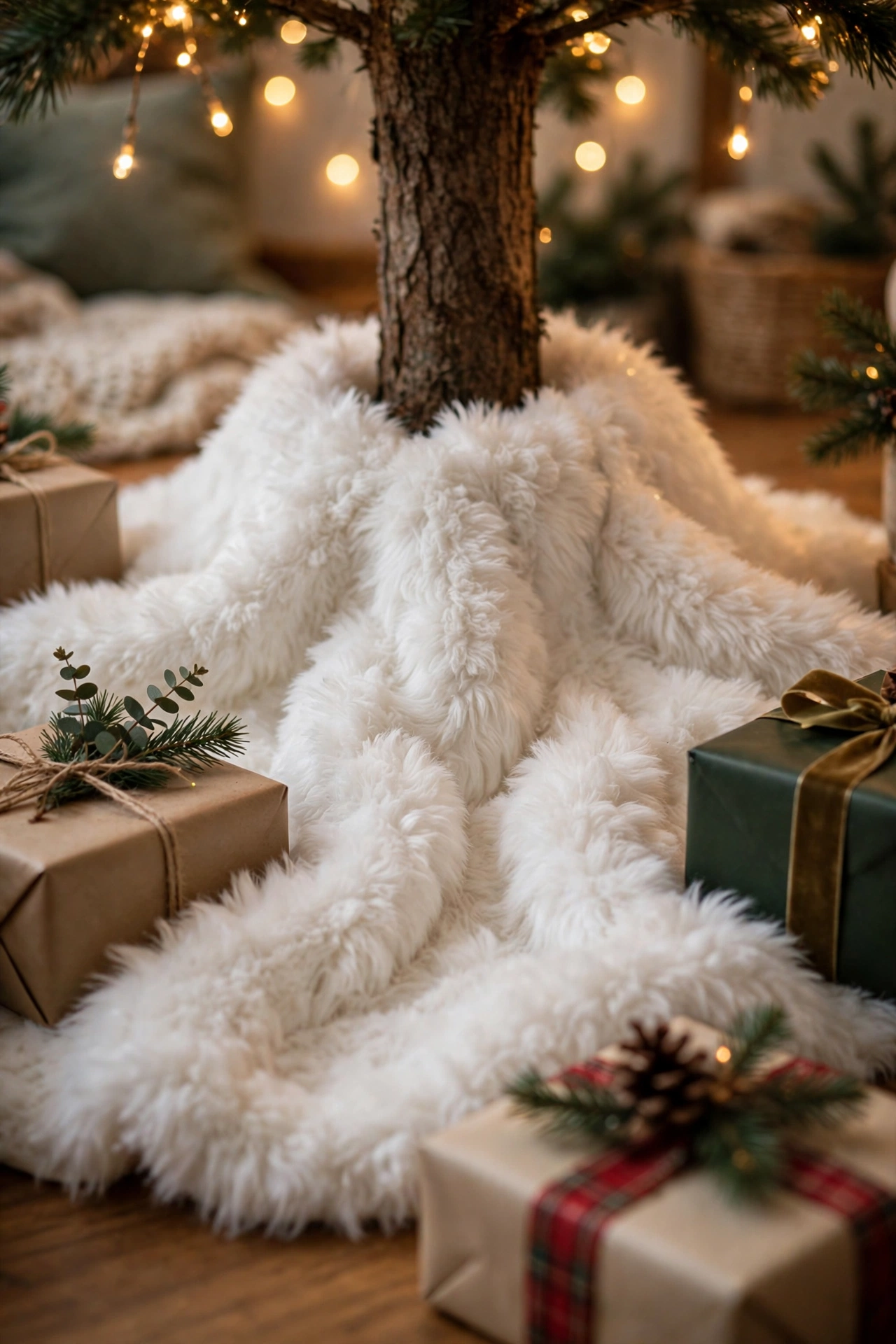
The faux fur skirt is the most popular skirt of the season, and the 2026 gift guides put it at the top of their lists for a reason. A plush white or ivory faux fur skirt looks like fresh snow under the tree, and it does three jobs at once. It hides the stand completely, it catches the falling needles so they do not spread across the floor, and it gives the presents a soft, cushioned surface to rest on. No other skirt material does all three as well. The classic choice is a white faux fur skirt, 48 inches across, in a long pile fur that puddles softly on the floor. White reads as snow, it suits every colour scheme, from traditional red and gold to modern silver and white, and it photographs beautifully, which matters if the tree is the backdrop for family photos. Ivory is the warmer version, and it suits a tree with warm white lights and gold ornaments better than bright white does. Grey faux fur is the modern version, and it suits a minimalist tree with silver and white ornaments. Faux fur is also the most practical skirt for a real tree. A real tree drops needles all December, and a faux fur skirt traps them in the pile instead of letting them scatter across the floor. When the season ends, you shake the skirt outside, and most of the needles fall out. A flat fabric skirt lets the needles slide off onto the floor, and a woven skirt lets them fall through the weave. If you have a real tree, faux fur saves you sweeping. There are two things to check before you buy. First, the backing. A good faux fur skirt has a solid fabric backing that stops the fur from stretching out of shape and keeps the skirt lying flat. A skirt with no backing will bunch up around the stand and look lumpy. Second, the pile length. A long pile, about 2 inches, looks like deep snow and feels luxurious, but it can swallow small presents and it shows footprints. A short pile, about 1 inch, is easier to keep neat and it still reads as snow from across the room. For a house with small children or pets, short pile is the better choice, because it is easier to shake out and it does not trap as much. Faux fur skirts cost about 20 to 40 dollars for a good one, and they last for years if you store them folded, not crushed. Keep the skirt away from the fireplace and from real candles, because faux fur melts rather than burns, and a melted patch is hard to repair. With that one warning in mind, the faux fur skirt is the easiest way to make a tree look finished, and it is the skirt that most 2026 guides recommend first.
Knit and Cable Knit Skirts, the Sweater Look
The knit skirt is the cozy skirt, and it is the one that makes a tree feel like home. A chunky cream cable knit skirt looks like a favourite sweater wrapped around the base of the tree, and it brings a warmth that no flat fabric can match. The 2026 guides list cable knit among their top picks, and it is the skirt that suits a farmhouse tree, a vintage tree, and a tree with handmade ornaments better than any other. The classic choice is a cream or ivory cable knit skirt, 48 inches across, in a chunky knit with a clear cable pattern running from the centre to the edge. Cream suits a tree with warm white lights, wooden ornaments, dried oranges, and pinecones. Grey knit is the cooler version, and it suits a tree with silver ornaments and cool white lights. A red knit skirt is the bold version, and it suits a traditional red and green tree, but it is harder to match, so cream is the safer first buy. Knit skirts are warm in a way that goes beyond looks. The thick yarn insulates the floor under the tree, it softens the sound of presents being set down, and it gives children a soft place to sit while they look at the presents. A knit skirt also hides a stand well, because the thick fabric does not cling to the shape of the stand the way a thin fabric does. The texture does the hiding. There are two things to watch. First, the knit can stretch. A loosely knitted skirt will stretch out of shape over the season, especially if presents are piled on it. Look for a skirt with a fabric lining or backing, which holds the shape and stops the knit from sagging. Second, the knit can snag. Ornament hooks, pine needles, and pet claws all catch on loose knit, so keep the hooks away from the skirt and check the skirt for pulls before you store it. A small pull can be pushed back through with a crochet hook, and a lined skirt snags far less than an unlined one. A good knit skirt costs about 25 to 45 dollars, and it is the skirt that ages best, because knit never goes out of style. It also pairs beautifully with a knit stocking and a knit throw on the sofa, which ties the whole living room together. If your tree is rustic, handmade, or farmhouse in style, the knit skirt is the one that will look like it belongs there.
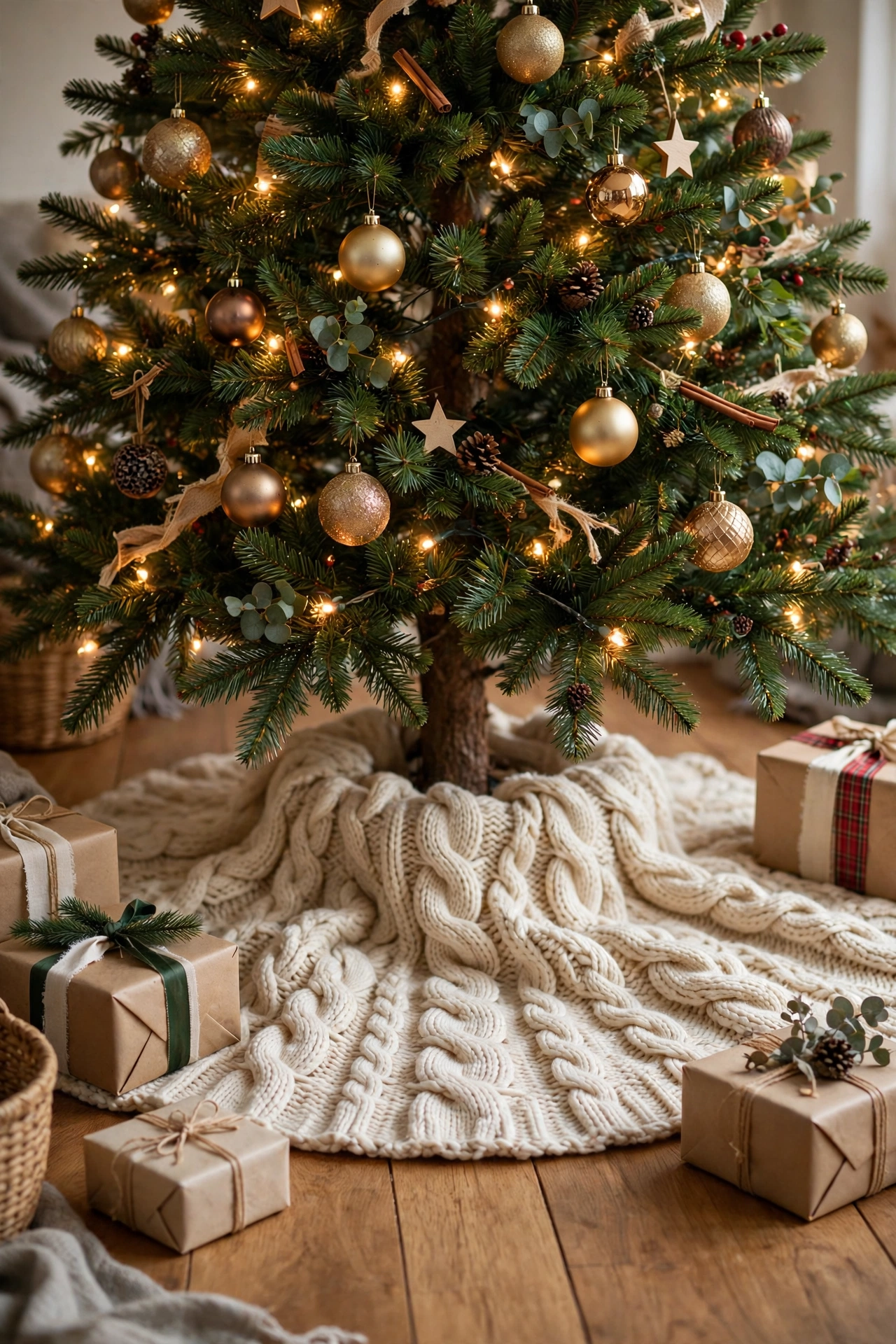
Velvet and Quilted Skirts, the Luxe Look
The velvet skirt is the elegant skirt, and it is the one that makes a tree look expensive. A deep red velvet skirt, or a forest green velvet skirt with a quilted pattern, brings a richness to the base of the tree that no other fabric matches. The 2026 guides feature velvet heavily, from ruby red quilted velvet to floral embroidered velvet with scalloped edges, and it is the skirt that suits a formal tree, a tree with glass ornaments, and a tree in a room with rich colours. The classic choice is a red velvet skirt, 48 inches across, in a deep ruby red with a soft sheen. Red velvet suits a traditional tree with gold ornaments and warm white lights, and it photographs as rich and warm. Green velvet is the quieter version, and it suits a tree with gold and cream ornaments. A velvet skirt in cream or champagne is the lightest version, and it suits a modern tree with silver ornaments, but it shows every mark, so it is not the right choice for a house with small children or pets. Quilting adds structure to velvet. A quilted velvet skirt holds its shape, it lies flat instead of bunching, and the quilting pattern gives the skirt a finished look even before the presents go on it. A plain velvet skirt can look flat and limp, especially in a thin velvet. If you choose velvet, choose quilted velvet, or choose a velvet skirt with a thick backing, because the backing is what keeps it lying flat and looking deliberate. Velvet has one weakness, and it is worth knowing before you buy. Velvet shows pressure marks, the shiny patches where a present has sat for a week, or where someone has knelt on it. The marks brush out with a soft clothes brush, and they disappear completely if you hang the skirt up for a day, but a velvet skirt in a busy house will need a quick brush before guests arrive. Velvet also attracts pet hair, so if you have a cat that sleeps under the tree, a faux fur or knit skirt will be easier to live with. A good velvet skirt costs about 30 to 60 dollars, and it is the skirt that makes the biggest difference to how expensive the tree looks. Pair it with velvet ribbon on the tree and a velvet bow at the top, and the whole tree reads as one deliberate design. The guide called Christmas Ribbon Decor Ideas covers velvet ribbon in detail, and it is worth reading before you buy, because the ribbon you choose decides how the velvet skirt will look.
Burlap, Jute and Rustic Skirts, the Farmhouse Look
The burlap skirt is the rustic skirt, and it is the one that makes a tree feel handmade and honest. A natural jute or burlap skirt, with a ruffled edge or a lace trim, suits a farmhouse tree, a tree with wooden ornaments, dried oranges, pinecones, and plaid ribbon, better than any other skirt. The DIY roundups list burlap and lace as one of their most popular handmade skirt ideas, and the rustic skirt guides call burlap the workhorse of the farmhouse look. The classic choice is a double layer burlap skirt, 48 inches across, in natural jute with a ruffled edge. The double layer matters, because a single layer of burlap is thin and you can see the stand through it. Two layers hide the stand completely, and they give the skirt enough body to hold its shape. A burlap skirt with a lace trim is the softer version, and it suits a tree with white and cream ornaments. A burlap skirt with a plaid ribbon border is the bolder version, and it suits a tree with red plaid ribbon and wooden bead garland. Burlap is also the most forgiving skirt to live with. It does not show pressure marks the way velvet does, it does not snag the way knit does, and it does not shed the way faux fur does. It hides dust, it hides needle drop, and it looks better slightly rumpled than perfectly smooth, which means you never have to fuss over it. If you have children or pets, burlap is the skirt that will survive December without looking tired. There are two things to check. First, the smell. New burlap has a strong, earthy smell, so air the skirt outside for a day before you put it under the tree. The smell fades quickly, and it does not come back. Second, the roughness. Burlap is rough to the touch, and it can scratch a polished wooden floor if it is dragged across it. Put a soft cloth or a felt pad under the skirt if your floor is polished, and lift the skirt to move it rather than dragging it. A good burlap skirt costs about 15 to 30 dollars, which makes it the cheapest of the five families, and it is the easiest skirt to make yourself. A yard of burlap, a pair of scissors, and a length of lace trim make a skirt in an afternoon, with no sewing at all. That is why burlap is the first skirt in the DIY section below, and why it is the skirt that most farmhouse trees wear.
Tree Collars, the Modern Alternative
The tree collar is not a skirt at all, and that is exactly why it is having such a moment. A collar is a rigid ring, usually 20 to 24 inches across and 10 to 14 inches tall, that stands around the base of the tree and hides the stand behind a clean, architectural wall. The 2026 guides are clear about the trend. Collars have surpassed traditional fabric skirts in popularity over recent years, and brands are betting big on statement collars for 2026, from woven rattan to vintage brass to slatted wood. The classic choice is a hand woven rattan or wicker collar in a warm honey brown. It suits a tree with natural ornaments, pinecones, dried oranges, and warm white lights, and it brings a texture to the floor that a fabric skirt cannot match. A metal collar, in galvanised steel or aged brass, is the modern version, and it suits a minimalist tree or a tree with metallic ornaments. A slatted wooden collar is the farmhouse version, and it suits a tree with wooden ornaments and plaid ribbon. A capiz shell collar is the glamorous version, and it suits a tree with glass ornaments and cool white lights. A collar solves three problems that skirts cannot solve. First, pets. A collar keeps pets from drinking the stand water, because the stand is hidden behind a solid wall, and it keeps dropped needles from spreading across the floor, because the needles fall inside the collar. Second, tidiness. A collar never bunches, never slides, and never needs fluffing, because it is rigid. It looks the same on Christmas Eve as it did on the day you put it up. Third, small spaces. A collar is much smaller than a skirt, so it works in a tight corner or a small room where a 48 inch skirt would eat the floor. There are two things to check before you buy. First, the size. Measure your stand across, including the feet, and buy a collar at least 2 inches wider than the stand on every side. A collar that is too tight will not fit over the stand, and a collar that is too loose will look empty. Second, the height. The collar should be tall enough to hide the stand, but short enough that the lowest branches clear it. Most collars are 10 to 14 inches tall, which suits most trees, but a tree with very low branches needs a shorter collar, about 8 inches, or the branches will sit on top of it. A good collar costs about 25 to 70 dollars, and it is the base that lasts longest, because a rigid collar does not wear out the way fabric does. It also stacks flat in January, which matters if your storage space is tight. If your tree is modern, if you have pets, or if you are tired of fussing with fabric, the collar is the alternative that will make you wonder why you ever used a skirt.
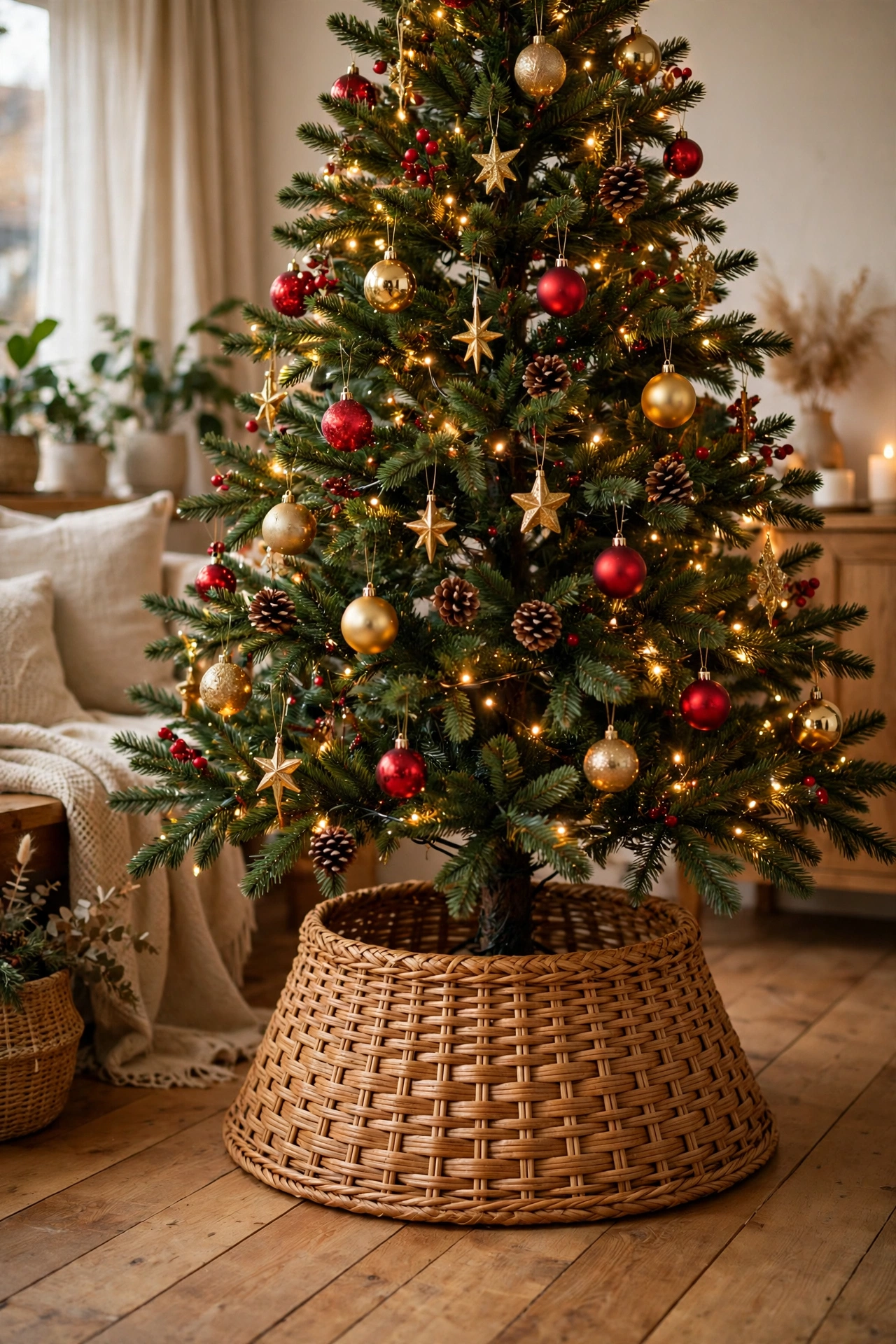
DIY Christmas Tree Skirt Ideas, Make It in an Afternoon
A handmade skirt is the most personal skirt, and the DIY roundups agree that it is also the easiest Christmas craft there is. A DIY tree skirt costs a fraction of a shop bought one, it matches your tree exactly, and it becomes the kind of thing your family remembers. These are the five DIY skirt ideas that actually work, with honest timings and honest skill levels, and none of them needs a sewing machine. The no sew fleece skirt is the easiest of all, and it is the one to make if you have never sewn anything. Buy 2 yards of soft fleece in cream, red, or a Christmas plaid, cut a large circle about 48 inches across, cut a small centre hole about 5 inches across for the trunk, then cut a straight slit from the outer edge to the centre hole so the skirt wraps around the tree. Finish the edge with fringe cuts, little slits about 2 inches deep all the way around, which stop the fleece from curling and give the skirt a finished look. Total time is about 30 minutes, total cost is about 10 to 15 dollars, and the result looks genuinely shop bought. The sweater upcycle is the coziest DIY skirt, and it costs almost nothing. Take an old chunky knit sweater you love but never wear, cut it open from armpit to armpit, lay it flat, and cut a large circle from it. Cut the centre hole and the slit, add buttons or ties at the opening, and you have a knit skirt with a real sweater texture that no shop can match. The knit texture is the whole point, so choose a sweater with a clear cable or chunky pattern, and use the cuffs and hem as the finished edge of the skirt where you can. The patchwork quilt skirt is the heirloom DIY skirt, and it is the one to make if you enjoy sewing. Sew together small fabric squares in coordinating Christmas prints, solids, and plaids into a circular patchwork design, back it with batting and a solid backing fabric, and quilt it lightly so it holds its shape. A patchwork skirt takes a weekend, not an afternoon, and it costs about 20 to 30 dollars in fabric, but it becomes a family heirloom, and it gains sentimental value with every passing season. Use fabric from old Christmas clothes or curtains if you want it to carry real memories. The burlap and lace skirt is the fastest rustic DIY skirt. Buy a yard and a half of burlap, cut the circle and the slit, then glue or stitch a wide white lace trim around the outer edge and a red ribbon border just inside it. The lace softens the burlap, the ribbon ties it to the rest of the tree, and the whole project takes about 2 hours. Add a stencilled holiday message in the centre, or a row of small jingle bells around the edge, if you want it to feel finished rather than plain. The felt applique skirt is the best DIY skirt for a house with children, because children can help make it. Cut a red or green felt circle, then cut felt snowflakes, stars, and trees from white and gold felt and glue them around the skirt. Felt does not fray, so there is no hemming, and felt glue holds well enough for a skirt that is not washed. Let the children place the shapes, and the skirt becomes a decoration in itself, and a story your family will tell every December. Whatever DIY skirt you make, follow three rules. First, make the centre hole small and the slit neat, because a gaping hole shows the stand. Second, add ties or Velcro at the slit, because a skirt that will not stay closed will slide open every time someone walks past. Third, test the skirt under the tree before Christmas Eve, with the presents on it, because a skirt that looks perfect empty can bunch badly under weight. A DIY skirt that passes that test is a skirt you will use for years.
Small Trees, Tabletop Trees and Odd Bases
A small tree needs a skirt too, but the rules change when the tree shrinks. A 48 inch skirt under a 3 foot tree looks like a tablecloth, and a full size collar around a tabletop tree looks like a plant pot. Small trees need small bases, and the base should be in proportion to the tree, not to the room. For a 4 to 5 foot tree, a 36 inch skirt is right, and the same five families all work at that size. A small faux fur skirt, a small knit skirt, or a small burlap skirt all hide the stand and give the presents a place to sit. The sizing rule still applies, 6 to 12 inches beyond the widest branches, but at this size the branches are narrow, so a 36 inch skirt is usually enough. A collar also works well at this size, because a 20 inch collar suits a 4 foot tree perfectly and takes up very little floor. For a tabletop tree, 2 to 3 feet tall, forget the skirt entirely and use a basket, a pot, or a small collar. A woven basket, about 10 to 12 inches across, holds the tree and hides the base in one move, and it looks deliberate in a way that a tiny skirt never does. A ceramic pot, a galvanised metal bucket, or a wooden crate all work the same way. Put a folded towel inside the basket to raise the tree to the right height, tuck a little faux greenery around the base to hide the gap, and the tree looks finished. The topper guide called Christmas Tree Topper Ideas covers small tree toppers, and it is worth reading alongside this section, because a tabletop tree needs a miniature topper to match its miniature base. For a tree in a corner, or a tree against a wall, a half skirt is the clever answer. A half skirt covers only the front of the tree, where guests can see, and it leaves the back open for the wall. You can buy a half skirt, or you can fold a full skirt in half and tuck the back under the tree. A half skirt saves fabric, it saves floor space, and it solves the problem of a skirt bunching against the wall. For a potted tree, a living tree that will go back outside in January, the base is part of the pot, so dress the pot instead of the tree. Wrap the pot in burlap and tie it with twine, or slip the pot into a woven basket, or paint the pot red and add a gold ribbon. A potted tree in a dressed pot looks intentional, and it keeps the living tree healthy, because the pot can still drain and the tree can still breathe. Whatever size your tree is, the base should match the tree, not fight it. A big skirt under a small tree, or a tiny collar under a big tree, will always look wrong, and no amount of presents will fix it. Measure the tree, measure the stand, and choose the base that fits both.
Conclusion
The base of the tree is the part that most people ignore, and it is the part that makes the biggest difference to how finished the tree looks. A skirt hides the stand, it hides the cords, it catches the needles, and it gives the presents a place to sit. A collar does the same job with clean lines and no fabric to fuss over. A DIY skirt does it with personality and a story attached. Start with the sizing rule, 6 to 12 inches beyond the widest branches, and a skirt that covers the whole stand. Then choose the family that matches your tree. Faux fur for the snow look and the easiest needle cleanup. Knit for the cozy sweater look and the farmhouse tree. Velvet for the luxe look and the formal tree. Burlap for the rustic look and the easiest life with children and pets. A collar for the modern look, the small room, and the house with pets. Or make your own in an afternoon, with fleece, an old sweater, patchwork, burlap and lace, or felt shapes the children helped to place. Put the skirt on before the presents go under the tree, step back, and look at the tree as a whole. If the base looks finished, the tree looks finished. That is the whole job of a tree skirt, and it is a job worth doing well, because the base is the part of the tree you see every time you walk into the room.
FAQ
What size tree skirt do I need for a 6 foot tree?
A 48 inch skirt is the standard choice for a 6 to 7 foot tree. The rule is 6 to 12 inches beyond the widest outer branches, so measure the lowest branches first. If your tree is very full, go up to 54 inches. If your tree is slim, 42 inches can work, but 48 inches is the safe buy.
Are tree skirts or tree collars better?
It depends on your house. A skirt is softer, cheaper, and better at catching needles, and it suits a traditional or farmhouse tree. A collar is tidier, sturdier, and better with pets, because it keeps them from the stand water, and it suits a modern tree or a small room. Neither is better in general. Choose the one that matches your tree and your household.
Can I use a blanket as a tree skirt?
Yes, and it works surprisingly well. A chunky knit throw, a faux fur throw, or a large plaid blanket folded into a circle makes a perfectly good tree skirt, as long as it covers the stand completely. Cut a small hole for the trunk if the throw is thick, or simply tuck the throw around the stand. A throw is the fastest no buy skirt there is.
How do I stop a tree skirt from sliding around?
Put a non slip rug pad under the skirt, or use a skirt with a heavier fabric and a solid backing. A light, unlined skirt slides every time a present is pushed against it. A heavier skirt stays put. You can also tape the edge of the skirt to the floor with double sided tape, out of sight under the branches, which holds it without showing.
How do I wash a Christmas tree skirt?
Check the label first, because faux fur and velvet usually need a gentle hand wash or a dry clean, while burlap and cotton can go in the machine on a gentle cycle. Shake the skirt outside first to remove the needles, then wash it cold and dry it flat, never in a hot dryer, which can shrink knit and melt faux fur. Store the skirt folded in a pillowcase, not crushed in a bag, so it keeps its shape until next December.