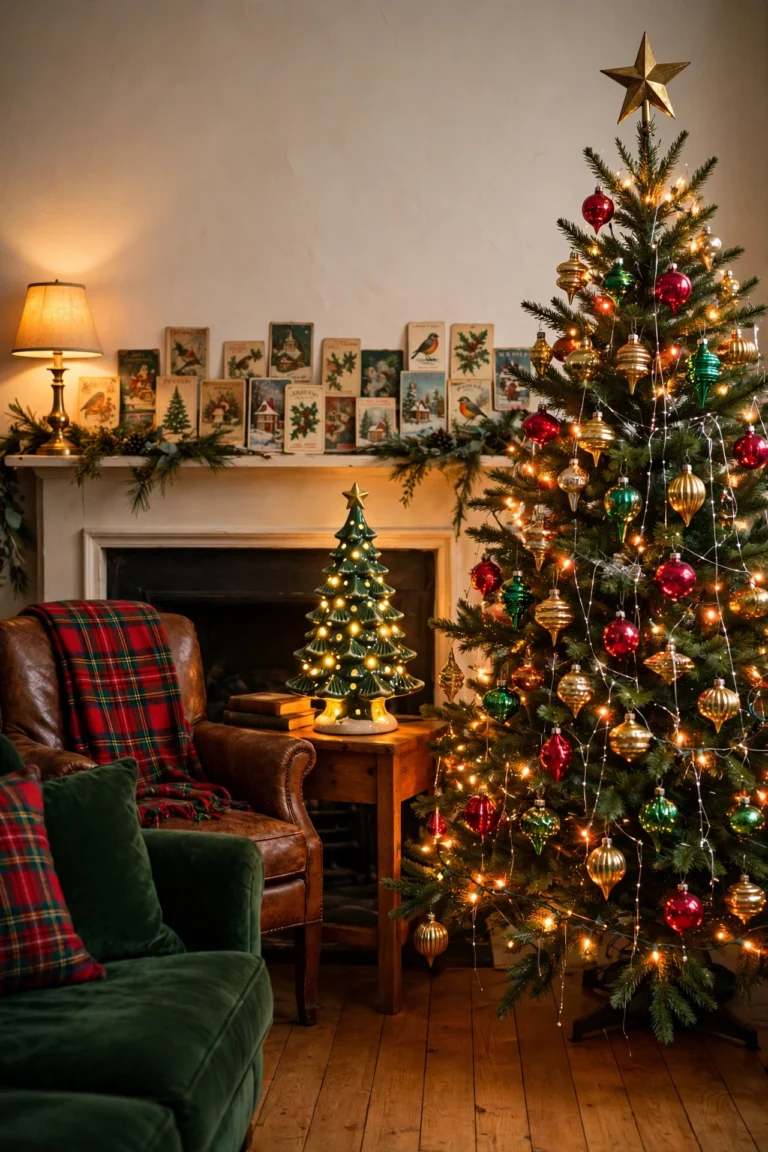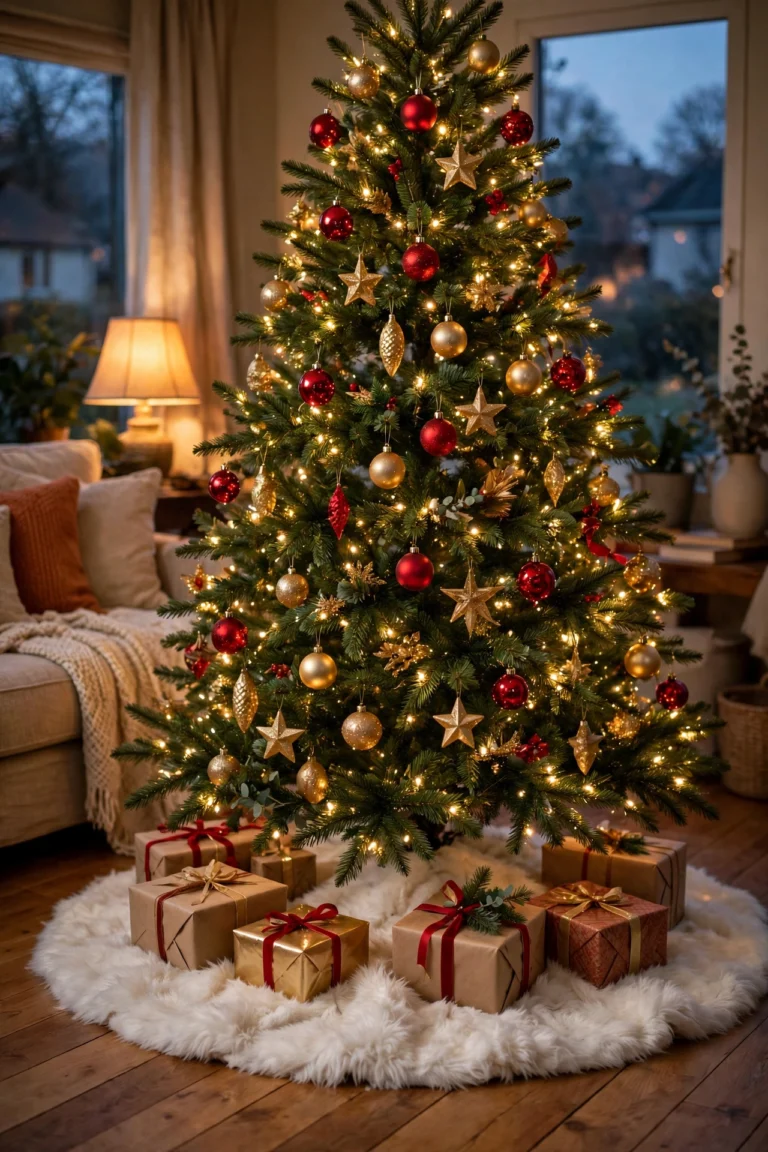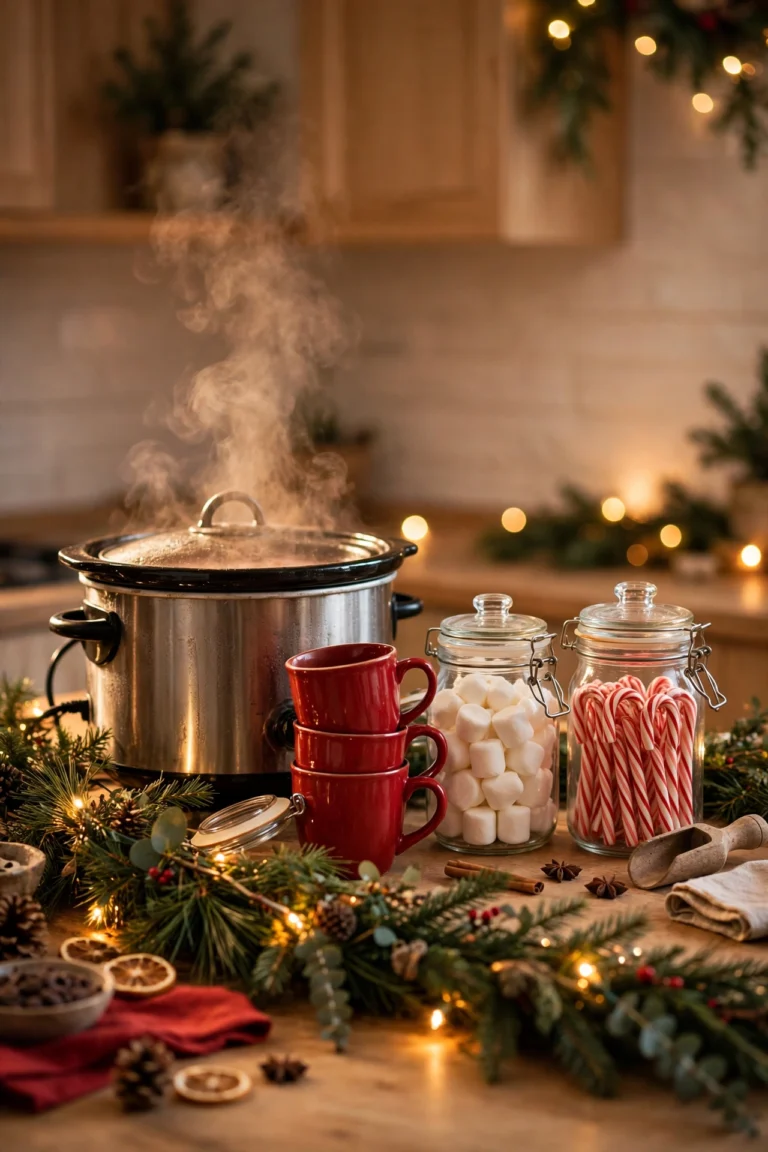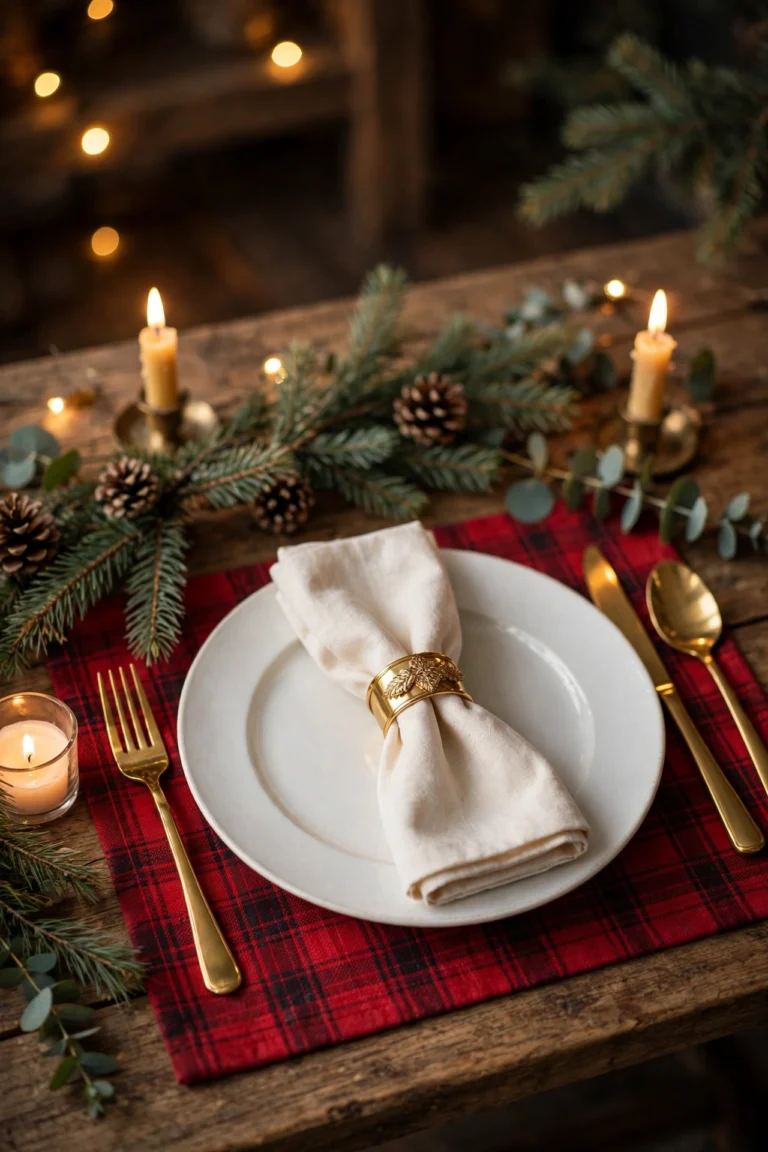
Christmas Sideboard Decor Ideas That Make the Dining Room Shine
The sideboard is the most underused piece of furniture in the Christmas house. The tree gets the ornaments, the mantel gets the garland, the table gets the centrepiece, and the sideboard gets whatever is left over, usually a candle and a bowl that has sat there since October. That is a waste, because the sideboard is the one surface in the dining room that can do two jobs at once. Most days of December it is a display, the long, low stage that sets the mood of the whole room. On party nights it becomes a buffet, the place where the food lives while the table stays free for sitting and talking. No other piece of furniture changes roles that easily, and no other piece rewards a little styling as much.
I learned this the Christmas my dining table turned out to be too small. Twelve people were coming, the table seated eight comfortably and ten at a squeeze, and the food had nowhere to go. My mother looked at the sideboard, which was holding a lamp and a stack of old magazines, and said the words that changed how I decorate: clear that, the food goes there. We moved the lamp, laid a runner, put the plates at one end and the dishes in a row, and dinner worked. Guests served themselves from the sideboard, sat down at the table with full plates, and the evening felt generous instead of cramped. The next year I styled the sideboard on purpose, with a mirror above it, a garland along the back, candles at one end, and I kept the middle clear on purpose so the buffet switch would take ten minutes instead of an hour. It has been the best decorated surface in my house ever since.
That is what this guide teaches. Christmas sideboard decor ideas that look finished on their own and still leave room to serve: the layout that works all season, what to hang above the sideboard, how to run a garland along the back edge, the two-height rule that makes any sideboard look styled, candlelight that is safe on wood, the ten-minute switch from display to buffet, and the colour schemes that pull the whole dining room together. For the room around the sideboard, our Christmas dining room guide covers the walls, the chandelier and the chairs, our Christmas dining table guide covers the table itself and its centrepieces, and our Christmas bar cart guide covers the drinks corner that pairs so well with a buffet sideboard.
1. The Sideboard Has Two Jobs: Display Most Days, Buffet on Party Nights
Every good Christmas sideboard starts with an honest decision about its two jobs. The first job lasts all December. The sideboard is a display, the long surface against the dining room wall that guests see the moment they walk in. It holds the mirror or the wreath above it, the garland, the candles, the bowl of ornaments, and it tells everyone that Christmas has arrived in this house. The second job lasts a few hours on a few nights. The sideboard becomes a buffet. The display moves to the ends, the middle opens up, and the food takes over. A sideboard that can only do the first job is a decoration. A sideboard that can do both is the hardest working piece of furniture in the house.
The trick is to style for both jobs from the start. That means the display is never glued down, literally or figuratively. Every object on the sideboard should be movable in one hand. A heavy ceramic vase that needs two hands and a careful lift is a bad choice for a sideboard that will become a buffet, because on party night you will be moving it in a hurry with a tray in the other hand. A bowl of ornaments, a pair of candlesticks, a small stack of books, a lantern, these all move in seconds. Choose display pieces you can lift, slide, or carry without thinking, and the buffet switch becomes a pleasure instead of a chore.
It also means the middle of the sideboard stays clear on purpose. This is the hardest rule to follow, because an empty middle looks unfinished to most decorators. It is not unfinished. It is a serving lane, waiting. The display lives at the ends and along the back edge, and the middle is kept for the food. When guests arrive, the plates go where the middle is, the dishes line up in a row, and nobody has to ask where to stand. When the party is over, the dishes go back to the kitchen, the bowl of ornaments slides back to the middle, and the display is whole again. A sideboard styled this way never looks stripped, because the display was designed to be moved, not removed.
Think about the flow of people, too. A buffet sideboard works only if guests can reach it without blocking the door or the table. Leave a clear path at least 90 centimetres wide in front of the sideboard, about three feet, so two people can pass each other with plates in their hands. If the sideboard sits in a narrow dining room, set the food in a single line along the front edge and put the drinks somewhere else entirely, on the bar cart or the kitchen counter, so guests do not queue in one spot. The fresh 2026 guides make the same point in different words. One Christmas buffet guide recommends setting up a drink station away from the buffet to prevent bottlenecks, and it is right. Food on the sideboard, drinks somewhere else, and the room keeps moving.
Finally, decide early what the sideboard will hold underneath. The cupboards below a sideboard are the best storage in the dining room, and in December they should hold the serving pieces, the spare plates, the trivets, the tablecloths, and the extra cutlery. Keep those things within arm’s reach of the top, and the buffet switch takes ten minutes. Keep them in a box in the garage, and it takes an hour. Open the cupboards now, clear out the things that do not belong there, and put the Christmas serving kit inside. Your future self, standing in front of twelve hungry guests, will be grateful.
2. The Layout That Works All Season: Above, Back Edge, One Tall End, One Low End
Once the two jobs are settled, the layout is simple, and it is the same layout the fresh 2026 sideboard guides all describe. It has four parts. Above the sideboard hangs a mirror, a piece of art, or a wreath. Along the back edge runs a low garland. At one end stands something tall. At the other end sits something low. The middle stays clear. That is the whole formula, and it works on a sideboard of any size, in any style, in any colour scheme, because it gives the eye a frame, a line, a high point, and a low point, and then it stops. A sideboard styled this way looks finished without looking full, and it leaves room to breathe.
Start with the measurements, because a layout that ignores the size of the furniture will always look wrong. Measure the sideboard from end to end. A typical sideboard is between 140 and 200 centimetres long, about 55 to 80 inches. The piece above it, the mirror or the art, should be about two thirds as wide as the sideboard, never wider than the sideboard itself. A mirror wider than the furniture below it looks top heavy, and a mirror narrower than half the sideboard looks lost. Hang it so its bottom edge sits 15 to 20 centimetres above the sideboard top, about six to eight inches, close enough to feel connected, far enough that a tall candlestick does not bump into it.
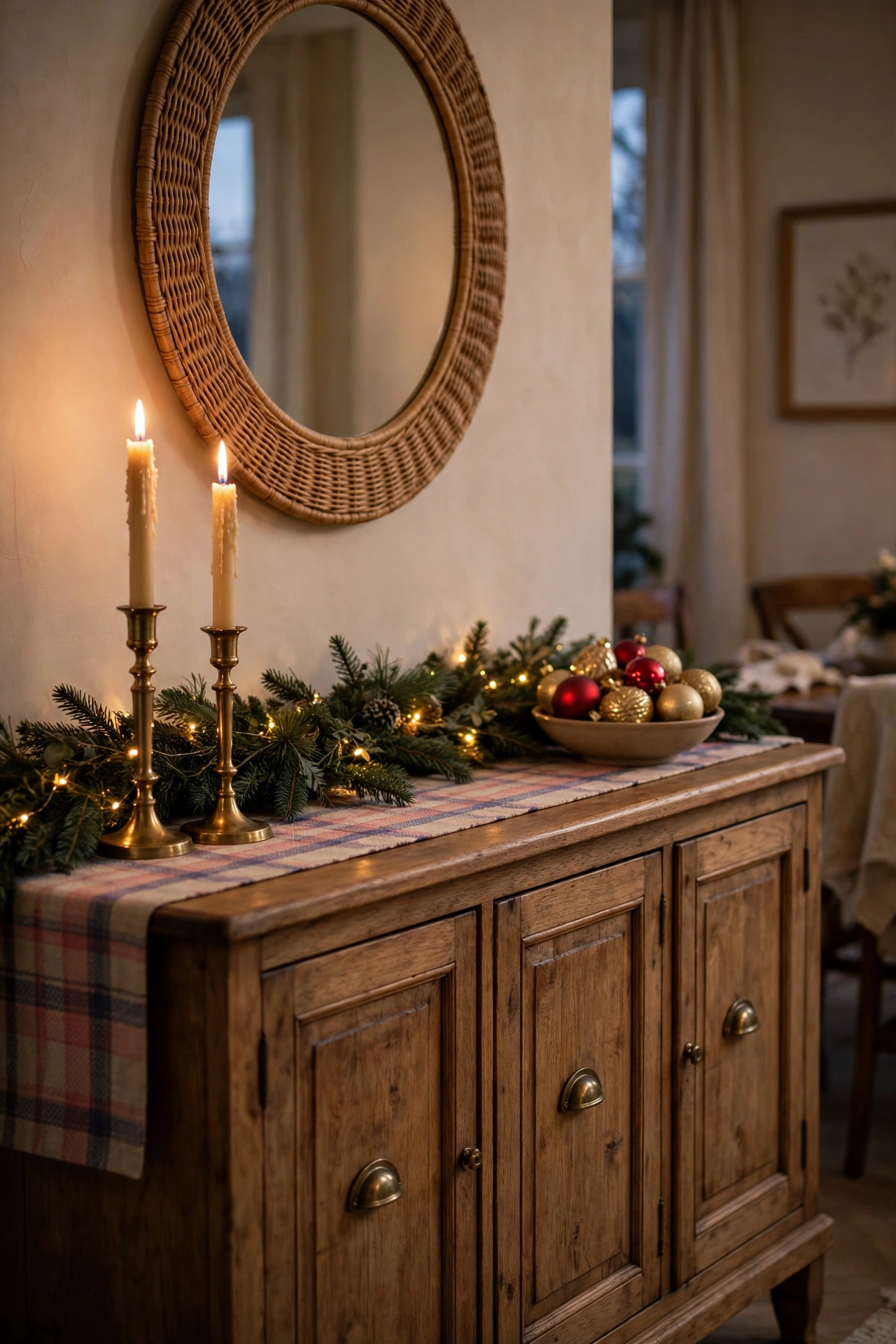
The garland along the back edge is the line that ties the whole layout together. Buy a garland at least as long as the sideboard, and a little longer, so the ends can droop past the sides by 15 centimetres or so. A garland that stops exactly at the edge looks measured. A garland that spills over looks generous. Lay it flat along the back edge, not in the middle of the top, so the front of the sideboard stays clear for serving. Fluff it before you hang the lights, add the lights before you add the ribbon, and add the ribbon and the picks last, once everything else is in place. That order, garland first, lights second, ribbon last, is the order every good garland guide gives, and it saves a lot of rework.
The tall end and the low end are what make the layout feel styled instead of simply filled. The tall piece can be a lamp, a pair of tall candlesticks, a vase of bare branches, or a small tree in a pot. It should be roughly twice as tall as the low piece, so the difference in height is obvious. The low piece can be a bowl of ornaments, a stack of books with a candle on top, a tray of pinecones, or a cluster of small houses. Put the tall piece at one end and the low piece at the other, and the sideboard gains a slope, high on one side, low on the other, that pulls the eye along its length. If the sideboard is very long, over 180 centimetres, you can put a tall piece at both ends and keep the low piece in the middle of the back edge, but on a normal sideboard one tall end and one low end is enough.
Small sideboards need the same layout, only lighter. If your sideboard is under 120 centimetres long, skip the tall lamp and use a single tall candlestick or a slim vase of branches instead. Keep the garland thin, a single strand rather than a doubled one, and use a small bowl instead of a large one. The formula does not change. It only shrinks. A narrow sideboard in a hallway follows the same rule, with the added warning that nothing should stick out past the front edge where a coat or a bag can catch it. Keep everything at least five centimetres back from the front edge on a hallway sideboard, and the display will survive December intact.
3. The Mirror or Wreath Above: The Anchor That Frames Everything
The wall above the sideboard is the anchor of the whole display. Without it, the sideboard is a long low surface with things on it, and the eye does not know where to rest. With it, the sideboard becomes a composition, a framed picture with a top, a bottom, and sides. The anchor can be a mirror, a wreath, or a piece of art, and each choice changes the feeling of the room in a different way.
A mirror is the most useful anchor, and it is the one I recommend first. A mirror doubles the candlelight in the room, which matters on dark December evenings, and it makes a small dining room feel larger, which matters all year. Choose a mirror with a frame that matches the sideboard, wood with wood, brass with brass, black with black, and hang it centred on the sideboard, not centred on the wall. The difference matters. A mirror centred on the wall can sit off to one side of the sideboard if the sideboard is not centred on the wall, and the display will look crooked. Measure from the ends of the sideboard, mark the centre, and hang the mirror on that mark. The bottom of the mirror should sit 15 to 20 centimetres above the sideboard top, close enough that the garland can touch its lower edge, far enough that a tall candlestick does not cover it.
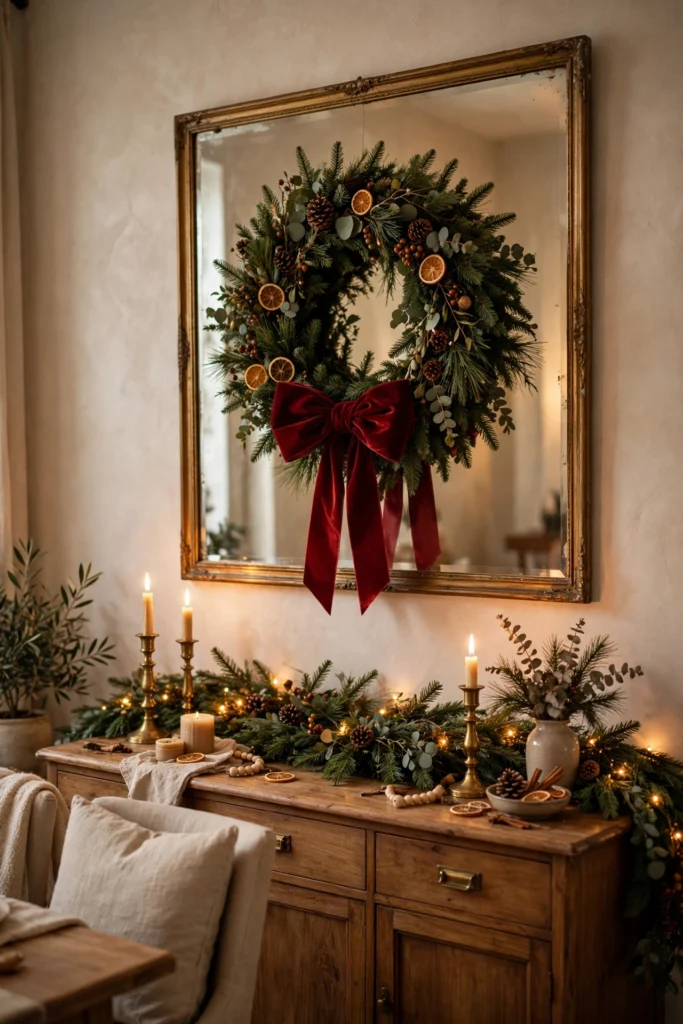
A wreath on the mirror is the classic Christmas move, and it works because it puts the season at eye level. Hang a full evergreen wreath on the mirror with a wide ribbon looped over the top of the mirror, and let the ribbon hang down the back where nobody sees it. The wreath should be about half the width of the mirror, big enough to read as a focal point, small enough that the mirror still shows around it. A wreath the same size as the mirror hides the mirror entirely, and then you have lost the light the mirror was giving you. Add a single velvet bow at the bottom of the wreath, in the same colour as the ribbon on the garland, and the mirror, the wreath, and the sideboard below will read as one display. The 2026 guides call the oversized velvet bow the number one trend of the season, and the mirror wreath is the best place to use it, because the bow is at eye level where everyone sees it.
A wreath on its own, without a mirror, is the third option, and it suits a sideboard against a plain wall. Hang the wreath centred on the sideboard, at eye level, with its bottom edge about 20 centimetres above the sideboard top. The wreath should be large, at least 60 centimetres across, because a small wreath on a bare wall looks like an afterthought. If the wall is dark, choose a wreath with pale eucalyptus or frosted tips so it reads against the paint. If the wall is pale, choose a deep green wreath with red berries so it stands out. A wreath alone works best when the sideboard below it is simple, a garland and two candlesticks, because the wreath is doing all the work above and the sideboard should not compete with it.
Art is the fourth option, and it is the one for people who already have a picture they love above the sideboard. Do not take it down for December. Dress it instead. A small wreath hung on the corner of the frame, a sprig of greenery tucked behind the frame, a ribbon tied to the top, and the art becomes part of the Christmas display without being replaced. A gold framed winter landscape above a sideboard, with a garland below it, is one of the most elegant Christmas looks there is, and it costs nothing, because the art was already there. The rule for art is the same as for a mirror. It should be about two thirds as wide as the sideboard, centred on the sideboard, and hung close enough to feel connected to the display below.
Whatever anchor you choose, check it from the dining table. Sit down where your guests will sit and look at the sideboard. The anchor should be fully visible above the heads of the people across the table, not hidden behind a tall candlestick or a branch. If a tall piece on the sideboard blocks the mirror, move the tall piece to the far end. The anchor is the frame of the picture, and a frame that is half hidden is worse than no frame at all.
4. The Low Garland Along the Back Edge
The garland is the single most important piece of Christmas sideboard decor, because the garland is the line that holds the whole layout together. The garland runs along the back edge of the sideboard, the garland connects the tall end to the low end, the garland carries the lights, and the garland gives the display its green base. A sideboard without a garland can still look good, but a sideboard with a garland looks like Christmas. The fresh 2026 guides agree. A low garland along the back edge, with warm lights if you like, is the first thing every sideboard guide recommends, and the reason is that the garland works on any sideboard, in any style, at any budget.
Choose the garland before you choose anything else on the sideboard, because its thickness decides how much room is left for everything else. A full, thick garland, ten centimetres across or more, eats a lot of the top. A slim garland, five centimetres across, leaves room for a runner and a bowl. On a sideboard less than 40 centimetres deep, choose a slim garland. On a deep sideboard, 45 centimetres or more, you can afford a full one. If the only garland you own is thin and sparse, twist two strands together. Two thin garlands twisted into one look fuller and more realistic than a single thin strand, and the trick costs nothing if you already own two. Mixed greenery reads more real than uniform plastic, so if you are buying new, look for a garland that mixes pine with cedar or eucalyptus, and that has different needle lengths on the same strand.
Fluff the garland before you lay it down. This is the step everyone skips and everyone regrets skipping. A garland comes out of the box flat and narrow, and it stays flat and narrow until someone spends ten minutes pulling the branches out, bending them in different directions, and filling the gaps. Stand the garland on the sideboard, work from one end to the other, and pull every branch outward and upward until the garland is twice as wide as it was in the box. Then, and only then, add the lights. Weave a short string of warm white fairy lights through the garland, loosely, so the light comes from inside the greenery instead of sitting on top of it. Battery lights on a timer are the best choice for a sideboard, because there is rarely a plug nearby, and a timer means the garland glows every evening without anyone touching it.
Let the ends of the garland droop past the sides of the sideboard by 15 centimetres or so. A garland that stops exactly at the edge looks measured. A garland that spills over the ends looks generous, and it softens the hard corners of the furniture. If the garland is too short to droop, tuck the ends under and add a small cluster of ornaments or pinecones at each end to hide the cut. If it is too long, let it puddle a little at one end, or run it up the wall in a loose swag. A garland that is too long is easy to deal with. A garland that is too short is a headache, so buy at least ten percent more length than the sideboard measures.
Once the garland is in place, add the picks last. Picks are the small stems you tuck into the garland to add colour and texture: red berries, pinecones, eucalyptus, dried orange slices, cinnamon sticks. Use three kinds at most, and repeat them along the whole length so the garland reads as one piece. Five berry stems in one spot and none anywhere else looks like a mistake. One berry stem every 30 centimetres looks like a pattern. Keep the picks low and close to the greenery, so they do not stick up and block the mirror. And keep anything with a strong scent, cinnamon and dried orange, near the front edge, where guests can smell it when they lean in to serve themselves.
A real garland, fresh cut, is beautiful and it smells wonderful, but it sheds, it dries out, and it needs water. On a sideboard, where food will be served, a faux garland is the practical choice. It does not drop needles into the mashed potatoes, it does not dry out by the third week of December, and it can be packed away and used again next year. If you love the smell of real greenery, tuck a few fresh sprigs into the faux garland and replace them every week. You get the scent without the mess, and the sideboard stays clean enough to serve food from.
5. One Tall Piece, One Low Piece: The Two-Height Rule
The two-height rule is the simplest styling rule in this whole guide, and it is the one that makes the biggest difference. A sideboard with everything at the same height looks flat. The eye slides across it and finds nothing to rest on. A sideboard with one tall piece and one low piece has a slope, a high point and a low point, and the eye follows the slope from one end to the other. That movement is what makes a display feel styled instead of simply filled. The rule is easy. At one end of the sideboard, put something tall. At the other end, put something low. The tall piece should be about twice as tall as the low piece. That is all.
The tall piece can be many things. A lamp is the classic choice, because it adds light as well as height, and a lamp on a sideboard makes the dining room glow in the evening. A pair of tall candlesticks is the most Christmassy choice, because the flames give the sideboard a living light. A vase of bare branches is the most elegant choice, because the branches reach up without blocking the mirror. A small tree in a pot is the most festive choice, because it brings a second tree into the dining room. Choose the tall piece that fits your room and your style, and do not worry about which one is correct. They all work, as long as the piece is genuinely tall, at least 40 centimetres, and it stands at one end of the sideboard, not in the middle.
The low piece can be many things too. A bowl of ornaments is the classic choice, because it adds colour in a small space. A stack of books with a candle on top is the clever choice, because the books add height in small steps and the candle adds light. A tray of pinecones is the natural choice, because it brings the outdoors in. A cluster of small ceramic houses is the charming choice, because it gives guests something to look at up close. Choose the low piece that fits your style, and keep it under 20 centimetres tall, so the difference between the tall end and the low end is obvious.
Height can also come from raising a piece, not just from the piece itself. A candlestick on a stack of books is taller than the same candlestick on the bare sideboard, and the books add a second layer to the display. A small tree in a basket is taller than the same tree in a pot, and the basket adds texture. A lantern on a wooden box is taller than the same lantern on the table, and the box gives the lantern a stage. Raising a piece by five to ten centimetres is enough to change the whole profile of the sideboard. Raise it more than that, and the piece starts to look unstable, so keep the raise modest and the base steady.
The middle of the sideboard, between the tall end and the low end, is where the slope happens. Leave it mostly empty, with only the garland along the back edge. An empty middle is not a gap. It is the serving lane, the space where the food will go on party nights, and it is also the breathing room that lets the tall end and the low end stand out. A sideboard with objects all the way across its length looks crowded. A sideboard with a tall end, a low end, and a clear middle looks intentional. If the middle feels too empty to you, add one small thing, a single candle in a glass holder, a small stack of two books, a tiny bowl, and then stop. One small thing in the middle is a punctuation mark. Three small things in the middle is clutter.
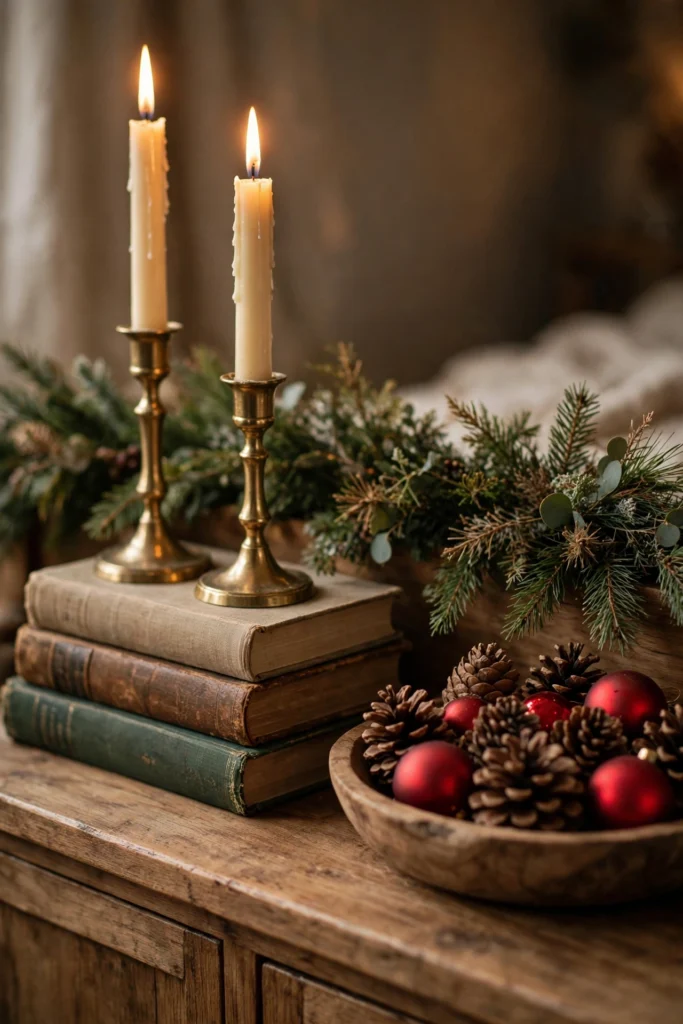
6. Candlelight That Is Safe on Wood
Candlelight is what makes a Christmas sideboard glow, and it is also what makes a sideboard owner nervous. Wood and flame are a bad combination, and a sideboard is usually made of wood, covered in greenery, and standing in a room full of people who are carrying plates and reaching across it. The good news is that candlelight on a sideboard is perfectly safe, as long as you follow a few rules that are easy to remember and easy to follow.
The first rule is to use flameless candles wherever the candle touches greenery. A battery candle inside a lantern, a battery taper in a candlestick that stands in the garland, a battery tea light in a glass holder tucked into the greenery, these all give the same warm glow as a real flame, and they cannot set anything alight. Modern flameless candles flicker realistically, they run on a timer, and they cost very little. Use them in every candle that sits in or on the garland, and save the real flames for candles that stand on the bare wood, far from anything flammable, where you can see them.
The second rule is to keep every real flame at least 30 centimetres from anything that can burn. That means 30 centimetres from the garland, from the ribbon, from the paper stars, from the dried oranges, and from the curtains behind the sideboard. A taper candle in a tall brass candlestick, standing on the bare wood at the end of the sideboard, with nothing above it and nothing beside it, is safe. The same candle tucked into the garland is not safe, no matter how pretty it looks. Measure the distance with a ruler the first time, and after that your eye will know it. If you are unsure, use a flameless candle. The glow is the same, and the risk is gone.
The third rule is to protect the wood under every candle and every hot dish. A candle drips, a slow cooker sweats, a serving dish fresh from the oven can scorch a finish in minutes. Put a trivet, a thick board, a folded cloth, or a ceramic tile under every hot thing on the sideboard. A wooden trivet under a wooden bowl looks intentional. A cork mat under a candlestick disappears. A runner under the whole display protects the top and adds pattern at the same time. Never put a hot dish directly on the bare wood, and never put a lit candle directly on the bare wood. A candle in a proper holder, on a trivet, on a runner, is three layers of protection, and any one of them would be enough on its own.
The fourth rule is about height and stability. Tall taper candles look wonderful on a sideboard, but they are top heavy, and a sideboard in a busy dining room gets bumped. Use candlesticks with a wide, heavy base, and push the candle firmly into the holder so it cannot wobble. Pillar candles are safer than tapers, because their wide base makes them hard to knock over, and a pillar in a glass hurricane shade is safer still, because the glass stops the flame from touching anything and stops a passing sleeve from catching it. If children will be at the party, use flameless candles everywhere, and put the real flames up high, on the mantel, where small hands cannot reach them.
The fifth rule is the simplest. Never leave a lit candle unattended on a sideboard, and blow out every real candle before you leave the room. A battery candle can stay on all evening. A real candle cannot. Make it part of the end of the evening, like locking the door. Blow out the candles, switch off the fairy lights, and the sideboard is safe for the night. Our Christmas candle guide covers pillar candles, tapers, and trays in every room, with the same safety rules in more detail, and it is worth reading before you buy.
7. The Ten-Minute Buffet Switch: From Display to Dinner
The buffet switch is the moment the sideboard earns its keep. Guests are arriving in ten minutes, the food is ready, and the sideboard has to change from a display into a serving station. Done well, it takes ten minutes. Done badly, it takes an hour, and the host is still moving ornaments while the first guests are standing in the doorway. The difference is preparation, and preparation means deciding the switch before the party, not during it.
Start by deciding, right now, which display pieces move and where they go. The bowl of ornaments slides to the far end. The candlesticks move to the other far end, or to the dining table. The stack of books goes on top of the sideboard cupboard, or on the floor beside it. The garland stays where it is, along the back edge, because it is the decoration that does not get in the way of the food. The mirror stays where it is, because it is on the wall. Write this down, or just rehearse it once. Move the pieces, time yourself, move them back. The first time you do it, it will take fifteen minutes. The second time, it will take ten. The third time, you will not need to think about it at all.
On the night, the switch has five steps. First, clear the middle. Slide the bowl, the books, and anything else in the middle to the ends, and put the trivets down where the hot dishes will go. Second, lay the runner. A narrow runner down the centre of the sideboard protects the wood and marks the serving lane, and it takes thirty seconds to lay. Third, set out the plates. Stack the plates at the end where guests will arrive first, with the napkins and the cutlery beside them, so guests pick up everything they need before they reach the food. Fourth, set out the food in serving order: mains first, then sides, then bread, then sauces, with the desserts on a tiered stand at the far end to save space. Fifth, put the drinks somewhere else. A drink station on the bar cart or the kitchen counter keeps guests from queuing in one spot, and it keeps spills away from the food.
The serving order matters more than most hosts think. Guests move along the sideboard in one direction, like a line, and if the plates are at the wrong end, the line folds back on itself and people bump into each other. Plates first, then food, then cutlery last, so guests are not juggling a knife and fork while they are trying to serve themselves. Put a small sign or a label on each dish, so guests do not have to ask what everything is. Put the serving spoons in the dishes, not beside them, so they do not get lost. And put a spare stack of plates and a spare pile of napkins under the sideboard, in the cupboard, so refilling takes seconds.
When the meal is over, the switch runs in reverse, and it is just as quick. Clear the dishes back to the kitchen, wipe the runner, slide the bowl of ornaments back to the middle, put the candlesticks back at the end, and the display is whole again. The sideboard that was a buffet for two hours is a display again for the rest of December. That is the whole point of styling a sideboard this way. The display is not something you sacrifice for the party. It is something you move aside for an hour, and then move back. The fresh 2026 buffet guides make the same point. Give the buffet three jobs, food service, candlelight, and one memorable focal point, and let the rest of the display wait patiently at the ends.
One last detail makes the buffet feel generous instead of improvised. Keep a small focal point on the sideboard even during the meal. A single lantern at the far end, a small cluster of ornaments beside the desserts, a sprig of greenery on the plate stack, and the sideboard still looks like Christmas while it serves dinner. A buffet with no decoration at all feels like a canteen. A buffet with one small festive touch feels like a celebration. The garland along the back edge does most of this work on its own, which is another reason it stays in place during the switch.
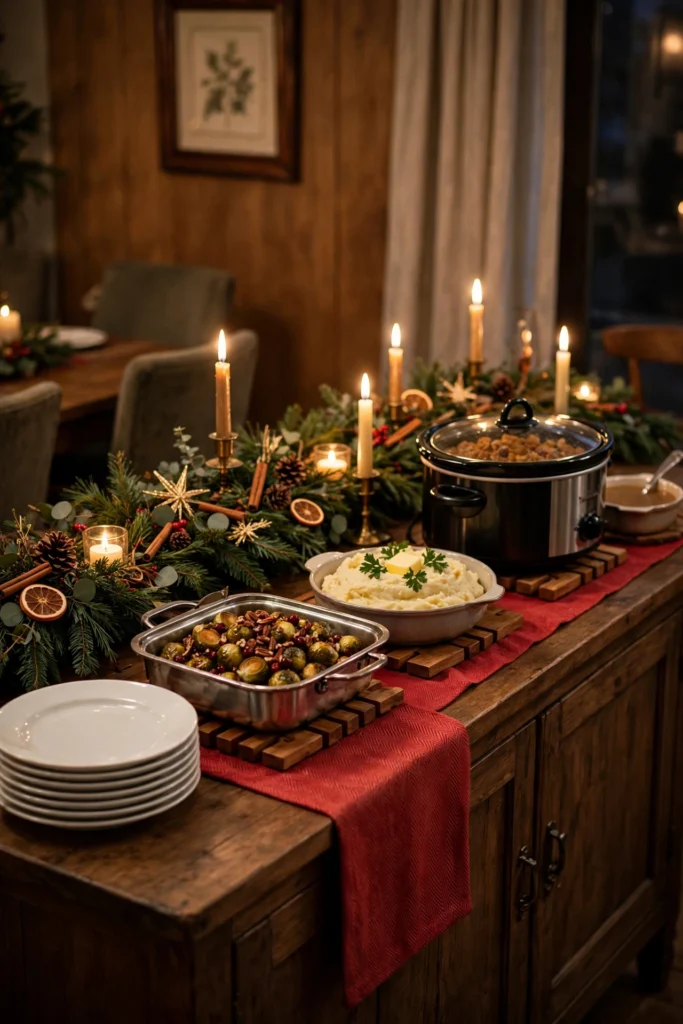
8. Colour Schemes That Work on a Sideboard
A sideboard is a small canvas, and a small canvas needs a clear colour scheme. Too many colours on one sideboard looks like a jumble. One clear scheme, repeated in three or four places, looks intentional. There are four schemes that work on a sideboard every time, and each one suits a different room and a different taste.
Classic red and green is the first, and it is the scheme most people picture when they think of Christmas. Deep green garland, red berries, red ornaments in the bowl, red ribbon on the wreath, brass candlesticks for warmth. It works in a traditional dining room, with dark wood and warm light, and it photographs beautifully, because the red pops against the green. The risk with red and green is that it can look loud, so keep the red to three places at most, the bowl, the bow, and the berries, and let the green do the rest. A red runner under the display ties it together without adding another red object.
Burgundy and gold is the second, and it is the scheme the 2026 guides call the Opera Aesthetic, deep burgundy velvet, gold accents, jewel tones, and candlelight, rich and romantic rather than cute. On a sideboard, burgundy means a velvet bow on the wreath, a burgundy runner, burgundy ornaments in the bowl, and gold candlesticks, gold ribbon, and gold berries to catch the light. It suits a formal dining room, a dark wall, a room with brass and glass, and it is the most elegant of the four schemes. The warning the guides give is worth repeating. Keep the burgundy to one fabric and one shade, or the sideboard tips from elegant into busy. One velvet, one burgundy, and let the gold do the sparkling.
Neutral wood and white is the third, and it is the scheme for a modern or Scandinavian room. Pale wood sideboard, white ornaments, frosted greenery, a white candle, a natural linen runner, and one small green accent, a sprig of eucalyptus or a single green wreath. It looks calm, it looks expensive, and it lets the shape of the sideboard show, which is the point in a room where the furniture is the decoration. The risk is that it can look plain, so add texture instead of colour. A woven bowl, a linen runner, a ceramic vase, a wooden bead garland, and the display gains interest without gaining colour.
White and gold is the fourth, and it is the scheme for a bright dining room, a room with white walls and a lot of daylight. White ornaments, gold ribbon, gold candlesticks, a white runner, and a garland with frosted tips that catches the light. It looks fresh and it looks festive without being dark, and it suits a sideboard against a white wall, where a deep green garland would look heavy. The risk is that white and gold can look cold, so add one warm thing, a wooden bowl, a brass tray, a cluster of pinecones, and the display gains the warmth it needs.
Whatever scheme you choose, repeat it in the rest of the room. The ribbon on the sideboard should match the ribbon on the tree, or at least be in the same family. The ornaments in the bowl should match the ornaments on the tree, or the candles on the table. A sideboard that uses a different colour scheme from the rest of the room looks like it belongs to a different house. A sideboard that repeats the room’s scheme, in a smaller way, looks like it belongs. That is the whole secret of a styled sideboard. It does not need to be the star of the room. It needs to be in tune with the rest of the room, and then the whole dining room sings.
Conclusion
A Christmas sideboard is a small project with a big return. It takes one afternoon to style, it costs very little if you use what you already own, and it changes the dining room for the whole of December. The formula is simple enough to remember. A mirror or a wreath above, a low garland along the back edge, something tall at one end, something low at the other, candlelight that is safe on wood, and a clear middle that is ready to become a buffet. Style it once, and the sideboard does two jobs all month, a display most days and a buffet on party nights, and the switch between them takes ten minutes.
Start today, while there is still time to enjoy it. Clear the sideboard, hang the mirror or the wreath, lay the garland, put the tall piece at one end and the low piece at the other, and step back and look at it from the dining table. If it looks finished, it is finished. If something feels off, it is almost always one of three things. The mirror is too small, the garland is too thin, or there is too much in the middle. Fix the one thing, step back again, and the sideboard will tell you when it is done. Then leave it alone, light the candles in the evening, and let the sideboard do what it does best. Make the dining room feel like Christmas, and make dinner feel like a celebration.
Frequently Asked Questions
Can a sideboard really be used as a buffet table?
Yes, and it is one of the best buffet tables in the house, because it is the right height, the right length, and it stands against a wall where guests can serve themselves without blocking the table. Move the display pieces to the ends, keep the garland along the back edge, lay a runner, put trivets under every hot dish, and serve in order, plates first, then mains, sides, bread, and cutlery last. Put the drinks on a separate station, on the bar cart or the kitchen counter, so guests do not queue in one spot. When the meal is over, slide the display back to the middle, and the sideboard is a display again.
How long should a garland be for a sideboard?
Buy a garland at least as long as the sideboard, and a little longer, so the ends can droop past the sides by about 15 centimetres. A garland that is too long is easy to deal with, you can let it puddle at one end or run it up the wall. A garland that is too short is a headache, because it will not reach the ends and the display will look unfinished. If your garland is thin, twist two strands together for a fuller look, and always fluff it before you add the lights.
How do I protect a wooden sideboard from hot dishes and candles?
Put a trivet, a thick board, a folded cloth, or a ceramic tile under every hot dish and every candle. A runner down the centre of the sideboard protects the top and marks the serving lane at the same time. Never put a hot dish or a lit candle directly on bare wood, and never put a slow cooker on the sideboard without a trivet underneath it. Wipe up spills right away, especially red wine and gravy, because they stain a wood finish fast.
What should I hang above a sideboard at Christmas?
A mirror is the most useful choice, because it doubles the candlelight and makes the room feel larger. A wreath hung on the mirror, with a wide velvet ribbon, puts Christmas at eye level. A large wreath on its own suits a plain wall, and a piece of art you already love can be dressed with a small wreath or a sprig of greenery instead of being taken down. Whatever you choose, make it about two thirds as wide as the sideboard, centre it on the sideboard, and hang it 15 to 20 centimetres above the top.
Are battery candles or real candles better on a sideboard?
Battery candles are better wherever a candle touches greenery, because they cannot set anything alight, and they run on a timer so the sideboard glows every evening without anyone touching it. Real candles are better on bare wood, far from anything flammable, where you can see them, because their flame is warmer and more alive. Use battery candles in the garland and real candles at the ends of the sideboard, keep every real flame at least 30 centimetres from anything that can burn, and blow out every real candle before you leave the room.
What if my sideboard is small or narrow?
Use the same layout, only lighter. Choose a slim garland instead of a full one, a single tall candlestick instead of a lamp, and a small bowl instead of a large one. Keep everything at least five centimetres back from the front edge, so nothing gets caught by a coat or a bag. A small sideboard needs fewer objects, not smaller ideas, and the two-height rule works just as well on a narrow piece as it does on a long one. If the sideboard is very narrow, put the tall piece on the wall above it, a wreath or a mirror, and keep the top almost clear.