
Vintage & Retro Home Decor Ideas
You know that feeling when you walk into a room and it just clicks? Not perfect. Just right. A worn leather chair next to a lamp that looks brand new. A gold mirror on a plain white wall, catching the light in a way that makes the whole room feel warmer. Nothing matches exactly. And somehow, nothing feels wrong. That, for me, is what vintage and retro decor is really about.
It is not about turning your house into an antique shop. God, no. And it is definitely not about copying some museum room you saw online. It is simpler than that. You pick pieces that have already lived a little, and you let them live next to you. The chipped vase your grandmother kept on her windowsill. The lamp you found for next to nothing, then fixed with a new shade on a rainy Sunday. The chair that creaks when you sit down, but fits that corner like it was made for it.
I have lost count of the thrift shops and flea markets I have wandered through, usually with no real plan and a coffee going cold in my hand. And here is what I keep noticing. The rooms people actually love are rarely the perfect ones. They are the rooms with a story tucked into them. So this guide pulls the best ideas from four older posts into one place, vintage home decor, vintage wall mirrors, retro lighting, and mid century modern style, and cuts out the bits that kept repeating themselves. No need to read four posts to plan one room.
What you will get here is practical stuff. How to mix eras without the room looking confused. How a mirror can make a small room feel twice as big. How lighting can change the mood in about ten seconds. And how to shop second hand without bringing home something you will regret. Take what fits. Leave the rest. And start small, please. One good piece, put in the right spot, does more than ten rushed buys ever will.
Why Vintage and Retro Still Feel Right at Home
Trends move fast, right? One minute everything is grey and minimal, the next it is all colour and clutter, and the room you finished six months ago already looks tired. Vintage pieces just do not date in that same, frantic way. They have already been around for decades. Their shapes and materials have had time to prove themselves. A solid wood side table from the sixties can sit happily next to a sofa you bought last year, because good design ages slowly. It does not shout for attention. It just stays.
There is a practical side too, and honestly, it matters. A lot of older furniture was built to be fixed, not thrown away. Real wood, brass, glass, ceramic. You can clean it, polish it, paint it, rewire it, and it will usually outlast a flat packed piece made of thin board and hope. That is good for your wallet, and it is better for the planet when you buy second hand instead of new. I am not saying you have to be perfect about it. Just that choosing one old piece over one new one is a small, sensible win.
And then there is the personal bit, which I think matters most, even if we do not say it out loud. Your home should feel like yours. Not like a showroom. Not like a catalogue page. A stack of old books, a few plates from a market stall, a mirror with a cloudy edge in one corner. Guests notice that stuff. They ask where you found it. And suddenly you are not just showing them a room, you are telling them a little bit about yourself. That is why this style keeps coming back, long after the shops have moved on to something shinier.
Start With a Calm Base, Then Let Old Pieces Shine
Here is my first rule, and it sounds boring, so bear with me. Start boring on purpose. White walls. Or warm beige. Or soft grey. Keep the sofa and the rug fairly plain. Why? Because that calm base does two jobs at once. It stops the room from feeling crowded, and it gives your older pieces space to be noticed. A floral sofa can be gorgeous, truly, but if the rug is floral too, and the curtains are floral, and the cushions are floral, your eyes do not know where to rest. They just get tired.
Once the base is calm, pick one focal point. Just one. Maybe a big vintage mirror over the fireplace. Maybe an ornate chandelier. Maybe a mid century sideboard in warm walnut that you found after months of looking. Let that piece anchor the room, and build everything else around it. Two or three strong pieces fighting for attention? That is when a room starts to feel like a shop. Choose your star, and let the rest support it.
Scale is the other thing people get wrong, and I have done it myself. A huge sideboard with a tiny lamp on top looks lost. A small mirror on a huge blank wall looks lonely. Step back, stand in the doorway, and just look. Does anything feel too big, too small, too crowded? Move it before you buy anything new. Honestly, most mixing problems are placement problems, and moving furniture costs nothing. Try it for a day, live with it, then decide.
How to Mix Eras Without Making a Mess
Mixing eras sounds easy until you actually try it. Then the room can look, well, confused. The trick I use is to repeat something, so your eye has a thread to follow. It could be a colour, a material, or a shape. If your vintage rug has a deep blue in it, use that blue again in a modern cushion, or in a piece of art on the wall. If your table is warm wood, pick a lamp with a wooden base, or a frame in a similar tone. You do not need everything to match. You just need a few quiet links between old and new.
Contrast helps, but only in small doses. A sleek mid century chair beside a rustic farmhouse table works, because the shapes are different in a clear, simple way. A floral antique curtain beside a graphic modern pillow works if they share one colour. Try one strong contrast per room, then keep the rest calm. If every piece is shouting, you cannot hear any of them. That sounds obvious, I know, but it is the mistake I see most often, in other people’s rooms and in my own.
Balance old and new in roughly equal measure, or lean a little toward new if you want the room to feel fresh. A vintage sofa with modern cushions feels lived in, not staged. Modern furniture with vintage accessories, like an old brass tray, a ceramic vase, or a framed black and white photo, feels warm without feeling like a set. And do not forget pattern and texture. Layer a soft wool throw over leather, put a patterned rug under a plain table, and mix smooth glass with rough wood. Keep the patterns in the same colour family, and the mix will feel planned, even if you found the pieces years apart.
Collections help too, and they are a good way to use small vintage finds. Group old cameras, retro books, antique plates, or tiny vases together on a shelf, instead of spreading them all over the house. A group tells a story. A single item in every corner just looks scattered. Leave some empty space around the group, so it can breathe. That empty space is what makes a collection look curated, not cluttered.
Vintage Wall Mirrors That Open Up a Room
A vintage mirror does more than show your reflection. It bounces light, makes a small room feel larger, and adds a piece of art to a blank wall, all at once. That is why mirrors were one of the strongest ideas in the old posts, and why they deserve a full section here.
Start with placement. Put a large mirror across from a window, and it will throw daylight deep into the room. Put one above a fireplace, and it becomes a natural focal point, reflecting the warm flicker of the fire in the evening. In a hallway or a dark corner, even a small ornate mirror can make the space feel less closed in. Before you hang anything, hold it up in a few spots and watch what it reflects. A mirror that reflects a messy shelf will only double the mess, so aim it at something you like, like a plant, a window, or a piece of art.
Think about the frame as much as the glass. A distressed wood frame looks soft and relaxed against a brick wall. A gold ornate frame adds drama to a plain room, and it pairs well with velvet, linen, and other soft textures. A simple round mirror in a thin brass frame feels calmer, and it works well in a modern bathroom or bedroom. You can mix shapes in a gallery wall, too. Combine a few vintage mirrors with photos and art in different sizes, and keep the frames in a similar tone, so the wall feels collected rather than random.

Mirrors also work in places people forget. A small mirror in a kitchen, a hallway, or a dressing area can surprise guests in a good way. A mirror with a shelf, or a standing mirror with hooks, earns its place twice, because it is useful as well as pretty. In the bedroom, a large vintage mirror can act like a headboard, or sit across from a window to bring the garden inside. Just check the glass before you buy second hand. A little foxing, that soft cloudy spotting at the edges, can add character, but a large crack or a badly warped reflection will bother you every day.
Retro Lighting That Sets the Mood
Lighting is the fastest way to change how a room feels, and retro fixtures do it with personality. A warm bulb in an old lamp can make a plain evening feel cosy, while a cold white light can make the same room feel flat. Choose warm white bulbs, around 2700K if the box gives you a number, and use dimmers where you can. Your vintage pieces will look better in soft light, and so will you.
Start with the big statement. A Sputnik chandelier, with its starburst arms and round bulbs, is the classic mid century centrepiece, and it works best over a dining table or in a living room with a high ceiling. An arc floor lamp, with its long curved arm, is a good choice for a reading corner, because it brings light over a chair without needing a ceiling fitting. Look for polished chrome, or a bold colour like orange or mustard, if you want that 1960s and 1970s feel.
For kitchens and dining areas, industrial pendant lights in metal, with simple lines and Edison bulbs, add a workshop warmth that suits wood and brick. Hanging glass globes, alone or in a cluster over a table, bring a softer 1970s and 1980s glow, and they come in enough colours and sizes to fit most rooms. Ceramic pendants, with hand painted patterns and textured surfaces, add a craft feel, and they look lovely over a kitchen island.
Do not forget the smaller lights, because they do the quiet work. Gooseneck wall sconces, the kind you once saw in old cafes and diners, add a playful touch to a bedroom or a study, especially if the arm moves. Retro table lamps in ceramic or metal, with quirky shapes and bright colours, can lift a side table or a desk in seconds. Bubble lights from the 1950s, with frosted glass in a cone or round shape, give a soft ambient glow that suits a bedroom or a reading nook. Tiffany style lamps, with stained glass in rich colours, throw patterned light across a wall, and they are lovely in a living room or a study. Old floor lamps from the 1950s and 1960s, with tripod bases or abstract shapes, can become conversation pieces in their own right.
One practical note before you buy an old lamp: check the wiring. Look for frayed cords, loose sockets, and plugs that feel hot after a few minutes. Many old lamps can be rewired cheaply by an electrician, and it is worth doing for safety. Use LED bulbs that mimic the warm glow of old filament bulbs, so you get the look without the heat and the high power bill.

Mid-Century Modern: Clean Lines, Warm Wood, Real Character
Mid-century modern, the style that grew from the 1940s to the 1960s, is the calm cousin in this family. It is about clean lines, organic shapes, and furniture that does its job without fuss. If vintage can feel busy, mid-century modern gives you a way to keep it simple, and that is why it fits so well in this pillar post.
The core idea is simplicity and function. Pieces like Eames chairs, Nelson benches, and low teak sideboards were designed to be used every day, not just looked at. Their shapes are simple, their wood is warm, and they leave a lot of empty space around them. That empty space is part of the design, not a waste of it. If you want a calmer vintage room, start with one or two mid-century pieces, and let them set the tone.
Colour is where mid-century modern gets playful. Rich teal, mustard yellow, burnt orange, and olive green can wake up a neutral room, and they work well in small amounts, like a cushion, a chair, or a piece of art. Mix materials, too: warm walnut or teak with black metal, woven fabric with smooth leather, and ceramic with glass. The mix feels layered, but the clean lines keep it from feeling messy.
This style also suits modern life in a practical way. Large windows, open plans, and a link between inside and outside were central to mid-century homes, and they still feel right today, especially if you like plants and natural light. Old mid-century pieces are often well made and built to last, which makes them a good second hand buy. Designers like Charles and Ray Eames, Hans Wegner, and Arne Jacobsen set the rules many of us still follow, even if we do not know their names. You do not need to buy an original to get the look, but it helps to learn the shapes, so you can spot a good copy from a poor one.

Colour, Pattern and Texture: The Vintage Palette
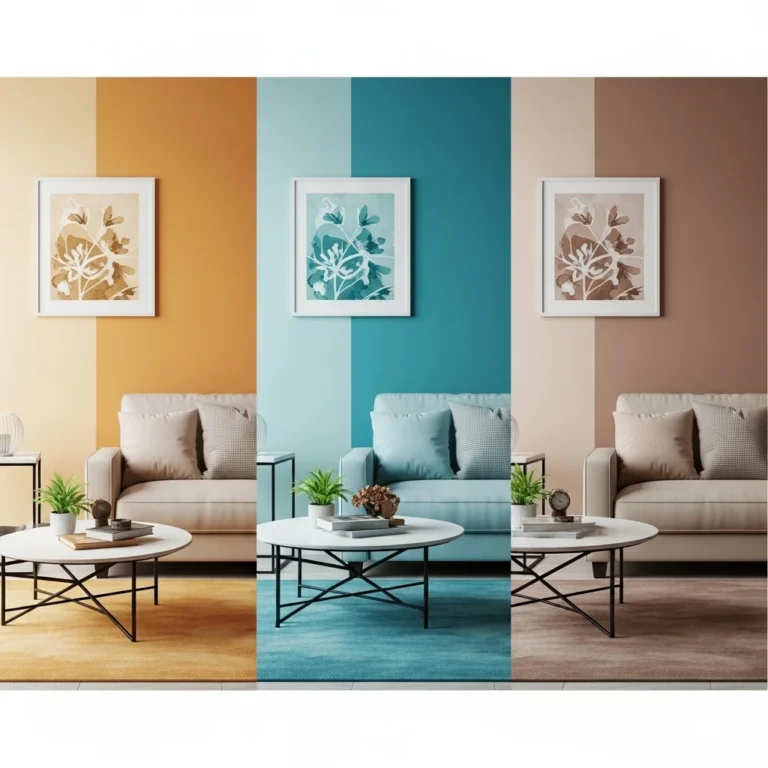
Vintage colour is not one colour, it is a mood. Earth tones, muted pastels, and rich jewel tones all belong here, and the trick is to pick a small palette and stick to it. Start with two main colours and one accent. For example, warm cream and deep green, with mustard as the accent. Or soft grey and dusty pink, with brass as the accent. Repeat those colours in the rug, the cushions, the art, and even the books on the shelf, and the room will feel tied together, even if the furniture comes from three different decades.
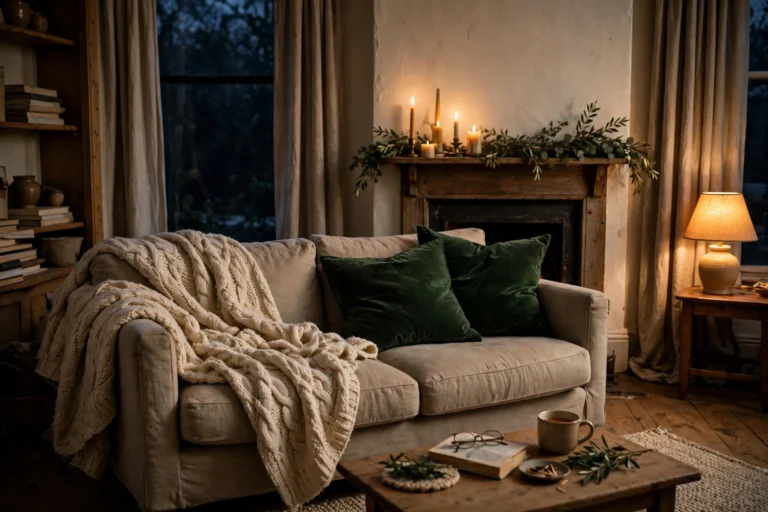
Pattern works the same way. A floral curtain, a striped cushion, and a geometric rug can live together if they share a colour, and if one pattern is clearly the largest and the others are smaller. Texture adds the warmth that pattern alone cannot. Mix leather with soft cotton, smooth glass with rough wood, and shiny brass with matte ceramic. Run your hand over a room in your mind as you plan it. If everything feels the same, add something different. A chunky knit throw on a smooth leather chair, or a velvet cushion on a wooden bench, can change the whole feel.
Personal touches belong in this section, too, because they are the cheapest way to make a room feel real. Family heirlooms, travel souvenirs, handmade crafts, and old photos do not need to be perfect. They need to be yours. Put the photo you love in a vintage frame, even if the frame is a little worn. That wear is part of the story, and it is what makes the room feel lived in, not decorated for a photo shoot.
Where to Find Good Vintage Pieces, and What to Check First
Good vintage shopping is mostly patience. Thrift stores, flea markets, antique shops, estate sales, and online second hand listings all have gems, but they also have a lot of tired pieces that are not worth the price. Go with a list, and measure your space before you leave home. Write down the width of the wall, the height of the sideboard, and the size of the rug you need, and keep those numbers in your phone. A beautiful chair that does not fit through the door is not a bargain.
When you find something you like, check it properly. Sit on chairs, open drawers, and wiggle tables to see if they wobble. Look under the piece for woodworm holes, water damage, or a smell that will not go away. Smell matters, especially with old sofas and rugs, because some smells are very hard to clean out. For mirrors, check the glass and the back, and make sure the hanging wire or hooks are strong. For lamps, check the cord and the socket, as noted above. For textiles, hold them up to the light to spot thin spots and stains.
Do not be afraid to haggle politely at a market, or to walk away if the price feels wrong. There will be another lamp, another mirror, another chair. The best vintage rooms are built slowly, one good find at a time, not in one weekend of rushed buying. If you love a piece but it needs work, ask yourself honestly if you will do that work. A chair that needs new foam and fabric can be a great project, but only if you have the time, the budget, and a good upholsterer nearby. Otherwise, buy the piece that is ready to use.
Room by Room: Simple Ways to Try the Look
In the living room, start with the sofa and one vintage anchor, like a mirror, a sideboard, or a floor lamp. Add a rug with a faded pattern, a few cushions in vintage colours, and a collection on a shelf. Keep the television and the cables tidy, because clutter fights with vintage charm. A tray on the coffee table, with a small vase and a stack of old books, can pull the whole table together.
In the bedroom, a vintage mirror can be the star, either as a large piece above a dresser, or as a dramatic shape across from a window. Add a retro table lamp on each side of the bed, with warm bulbs, and a soft throw in a muted colour. Keep the bedding simple, so the older pieces stand out. A small vintage stool or a wooden chair in the corner gives you a place to put clothes, and it adds character without taking much space.
In the kitchen and dining room, industrial pendants or ceramic pendants over the table set the tone, and a vintage mirror in an unexpected spot, like a hallway near the kitchen, can add light. Use old plates, jars, and wooden boards as decor, not just storage, and group them on an open shelf. In a small flat, a single arc lamp, a round mirror, and a mid-century chair can give a whole corner a retro feel, without needing a full redesign.
Common Mistakes to Avoid
The first mistake is buying too much, too fast. A room full of vintage pieces can look like a shop, and it can be hard to clean and hard to relax in. Buy one piece, live with it for a week, and see how it feels before you buy the next one.
The second mistake is matching eras too strictly. You do not need everything from the 1960s to make a 1960s room. In fact, a room that is all one era can feel like a theme park. Mix a 1950s lamp with a 1970s chair and a modern rug, and the room will feel more natural.
The third mistake is ignoring light and scale. A dark room needs mirrors and warm lamps, not more dark wood. A small room needs a few larger pieces, not ten tiny ones. And a large room needs a focal point that is big enough to hold the space, not a tiny mirror lost on a huge wall.
The fourth mistake is forgetting comfort. A beautiful chair that hurts to sit in will end up in a corner, unused. Test everything you will use every day, and choose comfort first for sofas, beds, and dining chairs. Style can come second, and it usually follows comfort anyway.
A Simple Plan for Your First Vintage Room
If you are not sure where to start, try this simple plan over a weekend. First, clear the room and clean it, so you can see what you really have. Second, paint or tidy the walls if they need it, and choose a calm base colour. Third, pick your focal point, whether it is a mirror, a lamp, or a piece of furniture, and place it first. Fourth, add lighting, with one main light and one or two smaller lamps, all warm. Fifth, add texture, with a rug, a throw, and cushions in your chosen palette. Sixth, add a collection or a few personal items, and leave some empty space. Finally, live in the room for a week, move things that bother you, and only then buy the next piece.
That slow pace is the secret. Vintage decor is not a race, it is a way of building a home that grows with you. Each piece you add should earn its place, by being useful, beautiful, or meaningful, and ideally all three.
Final Thoughts
Vintage and retro home decor works because it is human. It keeps the best ideas from the past, like solid wood, warm light, honest craftsmanship, and colours that feel lived in, and it mixes them with the comfort and simplicity we need today. A vintage mirror can brighten a dark hallway. A retro lamp can turn a plain evening into a cosy one. A mid-century chair can remind you that good design does not need to shout to be noticed.
Start small, choose pieces you truly love, and give them room to shine. Mix eras with a clear thread of colour or material, keep the base calm, and let your personal story show in the details. Your home does not need to look like anyone else’s. It needs to feel like yours, and vintage pieces, with their small marks, their soft edges, and their long histories, are a lovely way to make that happen.
If you want more ideas in a similar spirit, look at rustic and farmhouse decor for warm natural textures, eclectic home decor for bolder mixing, wall art ideas for pairing mirrors with frames and prints, and modern home decor for clean contrast that keeps a vintage room feeling fresh. Pick one idea from this guide, try it this week, and see how your room answers back.