Christmas Garland Ideas to Make Every Room Feel Festive
Introduction
Nothing makes the holidays feel quite like a full and beautiful garland. A single line of greenery can change a mantel into something special, make a staircase feel softer, create a nice look around a door, and add style to a dining table, all before you put up one ornament. That is the hidden strength of Christmas garland ideas. Unlike a tree, which stays in one place, garland moves around the house and it connects every room with the same green theme.
Garland is also one of the easiest ways to get ready for Christmas because a single piece does a lot of work. Spread it out, hang it in a swag, or stack it, then add lights, ribbons and decorations to match your taste. Whether you like cedar, snowy white covered greenery, dried orange slices, or the new 2026 style with burgundy and sky blue, there is a look here for every room and every budget.
This guide shows eight Christmas garland ideas, one for each part of the house, plus a simple length guide so you get the amount the first time. Each idea works with fresh or faux greenery, and most of them take less than an hour to make.
1. Classic Cedar Garland on the Mantel
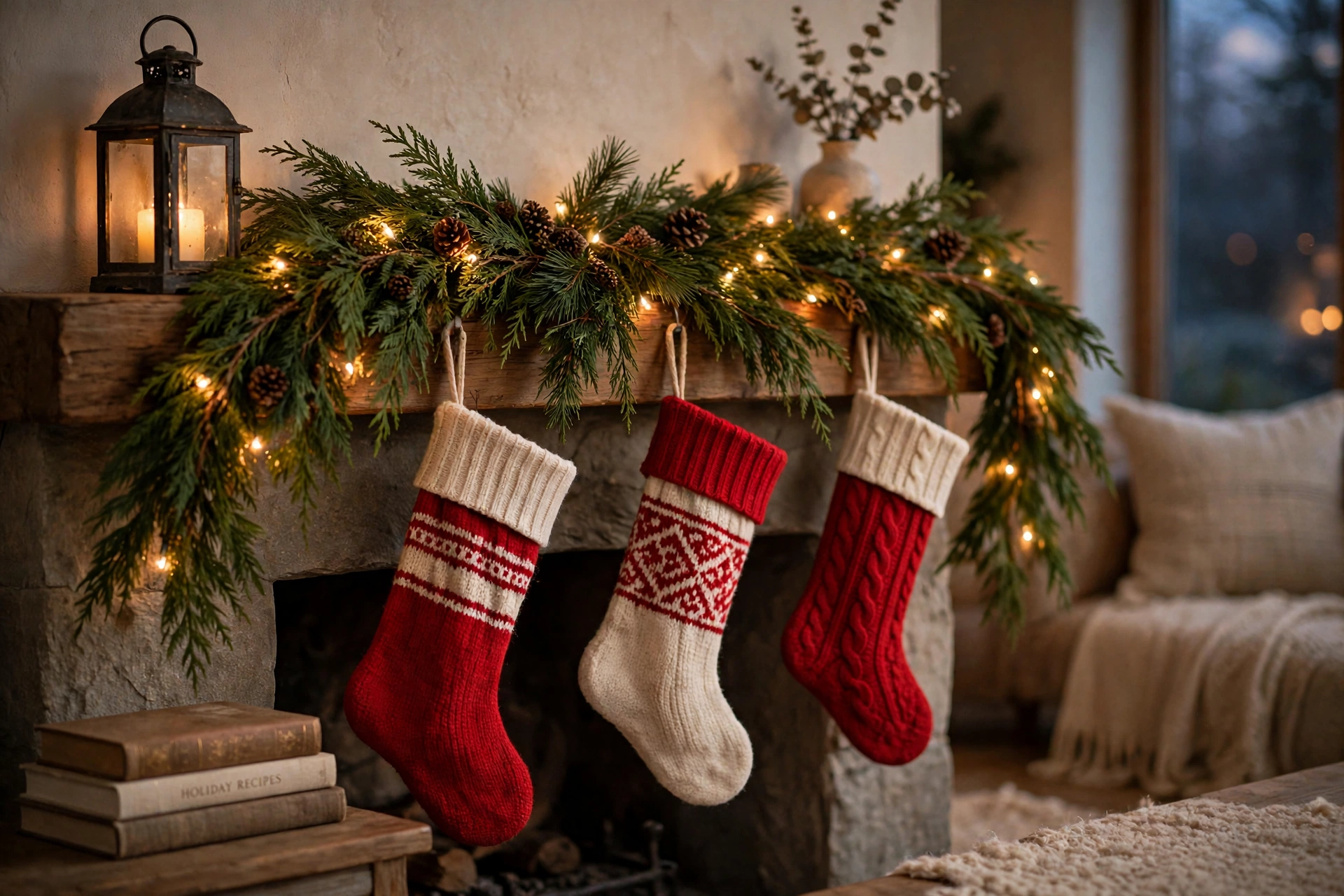
The mantel is the number one place for Christmas garland, and fresh cedar is the choice for a reason. I have found that cedar stays fresh and fragrant for weeks, holds its shape, and its scent fills the room every time the fireplace warms up. Drape one thick strand in a gentle double swag and let the ends trail slightly over the edges for a relaxed, gathered look.
Start by measuring the mantel. For most mantels, a garland of six to nine feet gives you enough length to swag across the front and let the ends fall. Anchor each end with a stocking holder or a clear adhesive hook, then let the middle dip in a soft curve. The dip is what makes it look styled rather than stretched tight, so resist the urge to pull it straight.
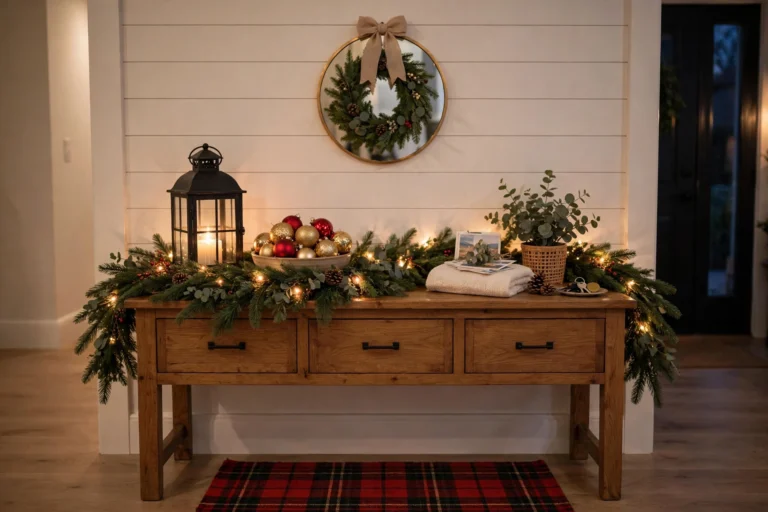
Layering makes a cedar garland look fuller. Lay a second, lighter strand over the first where the base looks thin, and mix in a few pine sprigs or a strand of eucalyptus for texture. Then weave in warm white lights before you add anything else. Battery operated fairy lights are ideal on a mantel, because the battery pack tucks neatly behind the greenery and no cord shows.
Finish with stockings hung below the garland line, so the greenery stays the top visual layer. Space the stocking holders evenly, and balance the ends with a lantern, a stack of books, or a tall candle holder. Keep candles away from fresh greenery, and choose LED taper candles if the garland sits close to the fire. Fresh cedar lasts three to four weeks indoors if you mist it lightly every few days and keep it away from heat vents.
2. Flocked Snowy Garland on the Staircase
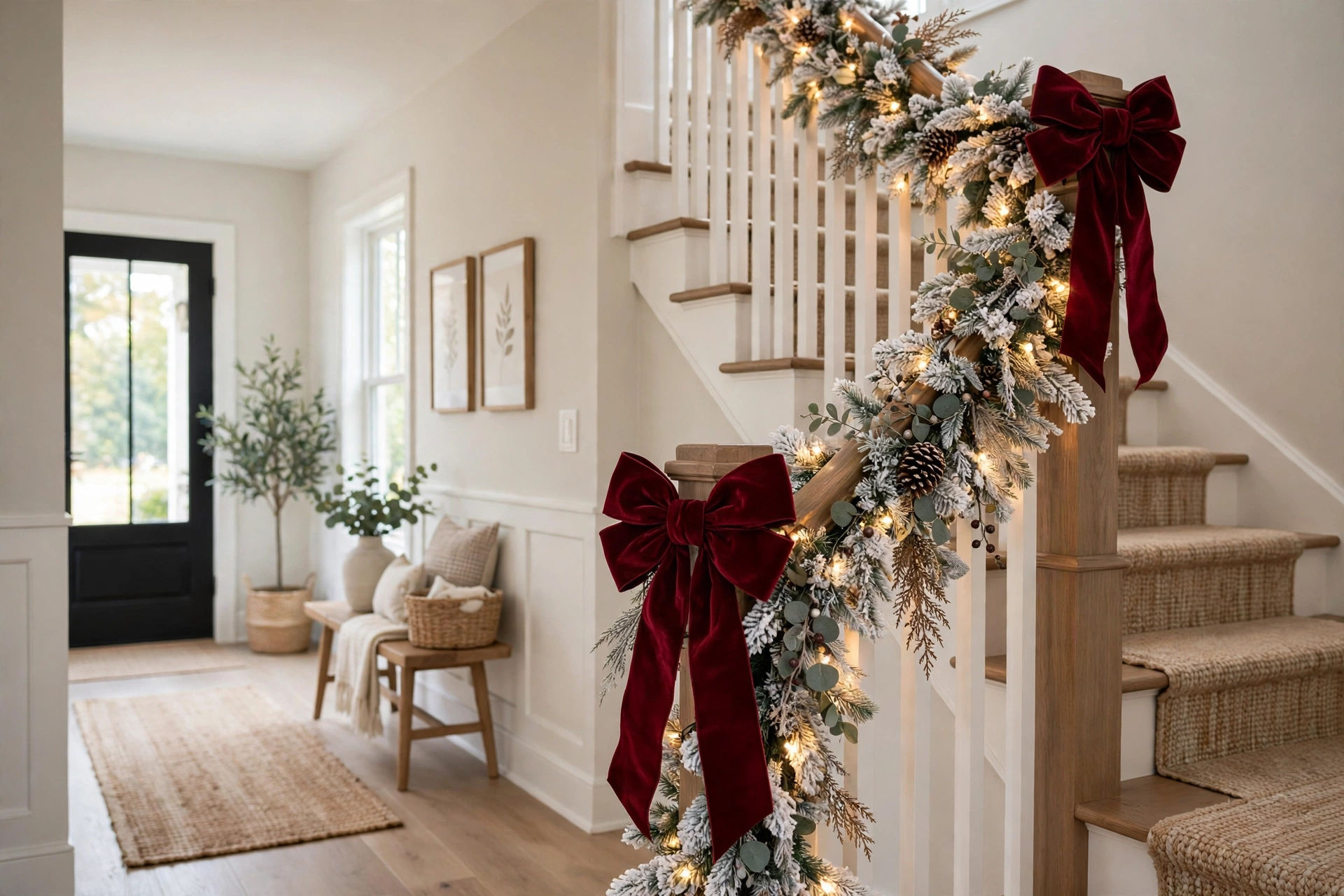
A Christmas staircase wrapped in snowy flocked garland is pure holiday drama, and it is one of the most saved Christmas garland ideas on Pinterest every year. Flocked garland gives you that fresh snowfall look with no mess and no watering, and that matters on a banister that gets touched daily. Choose a prelit strand so you skip the hard job of wrapping lights around a rail.
Work from the bottom of the stairs upward. Wrap the garland loosely around the handrail and tie it off with ribbon at every newel post, so the weight is shared and the swags hang evenly. Leave the handrail itself easy to grip, because guests still need it. Attach the garland to the outside face of the balustrade rather than wrapping the surface people hold, and let the greenery dip gently between attachment points.
Fluff the branches before adding ribbon, so the bows sit among the greenery instead of on a flattened rope. A few generous bows in a ribbon that repeats a colour from the room beyond will make the arrangement feel intentional. For a standard staircase, plan one strand per three feet of rail, plus one extra strand, so the swags stay full rather than stretched thin.
If you have small children or pets, faux flocked garland is the safer pick, because the flocking sheds far less than real snow spray and there are no needles to sweep up. When the season ends, fold the garland gently into a storage bag rather than crushing it, and it will look fresh again next year.
3. Eucalyptus Garland Framing a Doorway
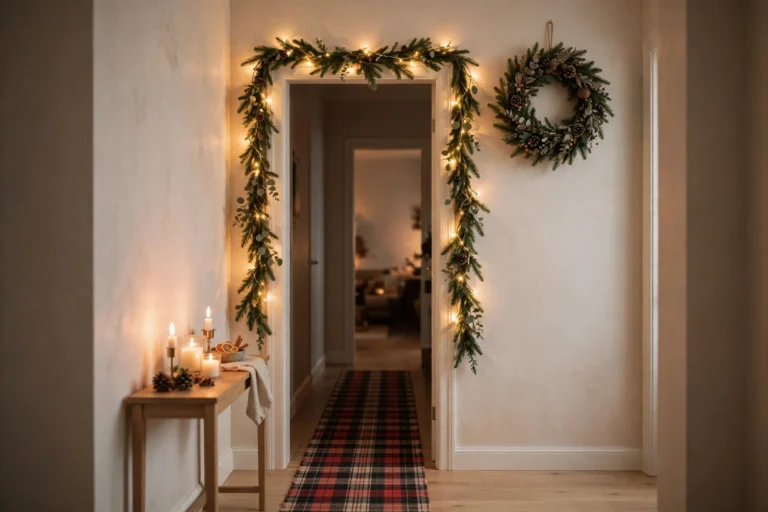
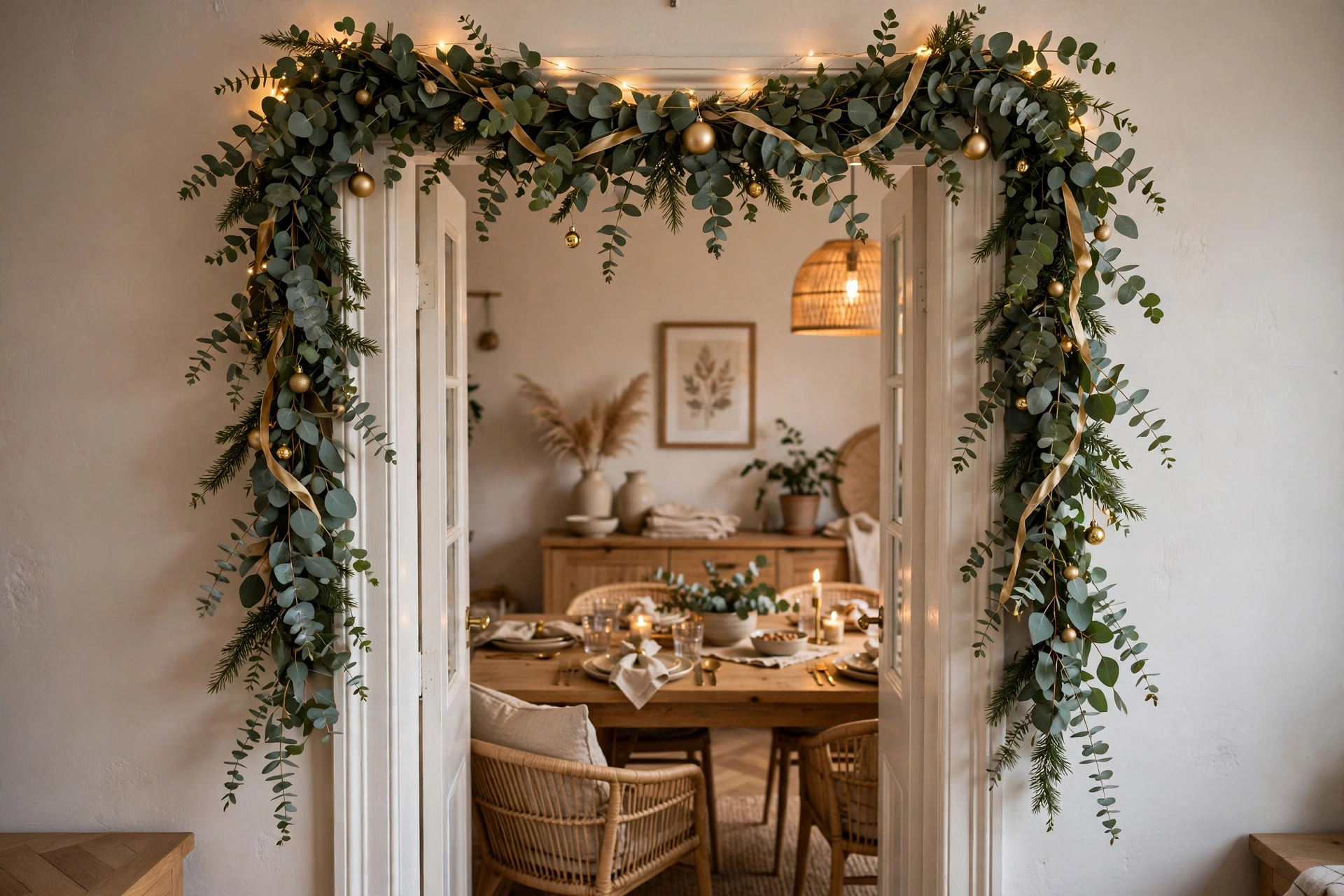
Framing a doorway with garland is one of the most dramatic moves in holiday decorating, and eucalyptus makes it look effortlessly chic. Its silvery green leaves and soft, flexible stems bend around a frame without cracking, and the scent is calm and clean rather than pine heavy. A doorway dressed this way turns walking into a room into a small event.
Measure the doorway first. For a standard door you will need roughly twelve to fifteen feet of garland to travel up one side, across the top, and down the other. Start at the top centre and work down both sides for symmetry, or cascade one side only for drama. Use clear adhesive hooks or a garland hanger that grips the frame without nails, so you leave no marks behind.
Eucalyptus looks best when it is not overdecorated. Let the leaves carry the look, and add only a few small ornaments or a thin ribbon woven through the stems. If you want light, use a battery strand of warm white fairy lights and tuck the pack behind the top corner. The soft glow against the pale leaves is beautiful in the evening, and it costs almost nothing to run.
This idea works for interior doorways too. An opening between the living room and dining area is a good candidate, because the greenery can be enjoyed from both sides. Run a lightweight faux eucalyptus garland around the outside of the upper casing and allow modest tails at the corners, so the doorway still feels open.
4. Berry Garland for Colour and Shine
If your greenery feels a little flat, berry garland is the answer. Dense clusters of red berries add a pop of colour to a mantel, doorway, or tablescape, and the look is timeless enough to use year after year. Gold and champagne berries do the same job in a more glamorous register, and they pair beautifully with metallic ornaments and candlelight.
Use berry garland as an accent rather than a base. Lay your green garland first, then weave the berry strand through it, letting clusters show at intervals instead of covering the whole length. On a mantel, a gold berry garland with champagne ribbon woven through turns the shelf into jewellery for the room. On a dining table, a short berry strand down the centre gives the table colour without blocking conversation across it.
Shatterproof berries are worth seeking out, especially if the garland hangs low or near a busy walkway. Realistic faux berries hold their colour all season, while fresh cranberry strands look lovely for a week but dry out and drop. If you love the fresh look, string cranberries and popcorn for a single evening event, then compost them the next day.
Berry garland also solves the problem of a bare spot. When one section of your green garland looks thin, tuck a berry cluster into the gap instead of buying another whole strand. It reads as a deliberate flourish rather than a fix, and it costs far less.
5. Dried Orange and Cinnamon Garland
For a natural, budget friendly look, nothing beats dried orange slices and cinnamon sticks. This is the oldest style of Christmas garland, and it is having a real moment again, because it fits the quiet, natural direction that dominates 2026 decorating: layered greenery, wood tones, dried elements, and undyed textures.
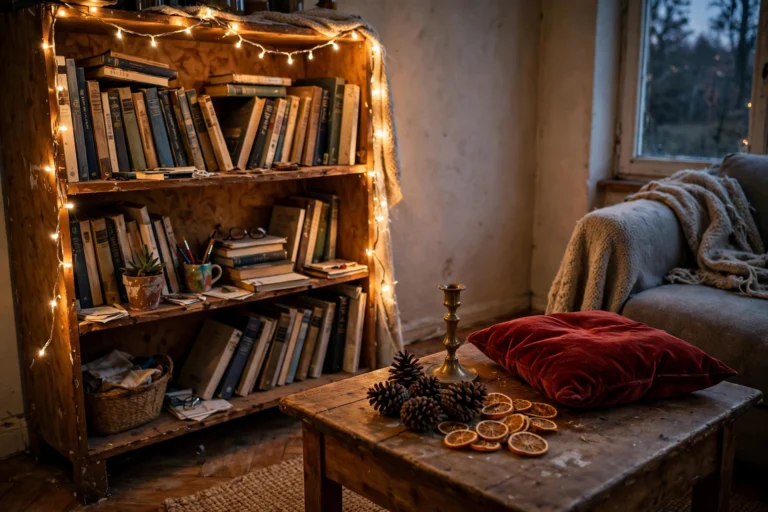
Making it is simple, and it is a lovely project to do with children. Slice oranges thin, dry them in a low oven until the edges curl, then thread them onto twine with cinnamon sticks and a few dried apple rings. Hang the finished strand on the Christmas tree, across a mantel, or along a window, and the whole room smells faintly of spice and citrus.
Dried orange garland pairs beautifully with fresh cedar or pine. Weave the orange slices into a green garland on the mantel, and the warm amber colour pops against the deep green. Add a few star anise pods for shape, and tie the ends with plain twine bows rather than shiny ribbon, so the handmade feeling stays intact.
This garland keeps well if you store it dry, and it costs almost nothing to make. A bag of oranges, a bundle of cinnamon sticks, and an afternoon is all it takes. If you hang it outdoors, bring it in when rain is forecast, because moisture will soften the slices and dull the colour.
6. Garland as a Dining Table Runner
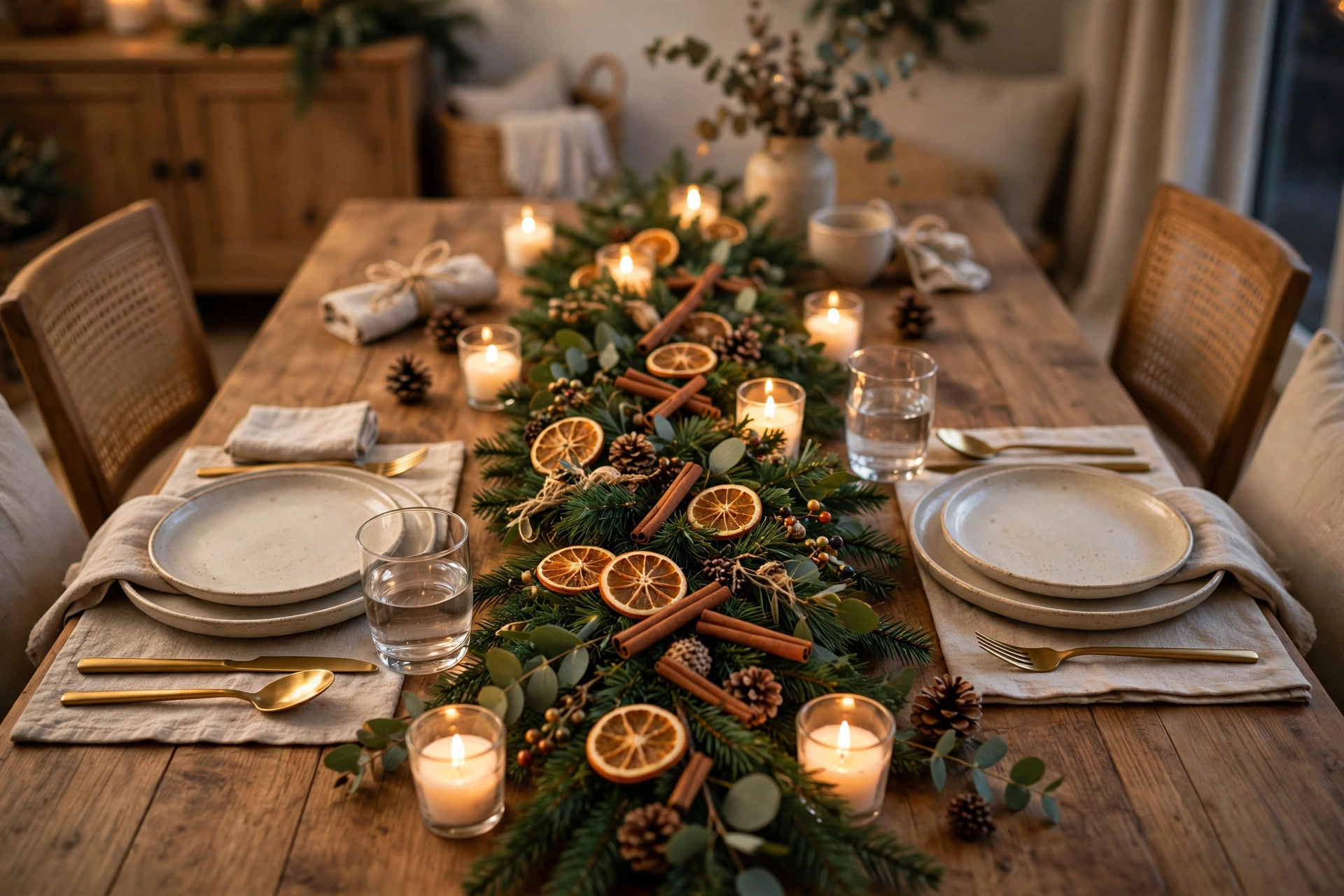
Most people think of garland on mantels and banisters, but the dining table is one of its best homes. A garland runner down the centre of the table creates a lush base for candles, ornaments, and place settings, and it costs far less than a floral centrepiece that wilts in a week.
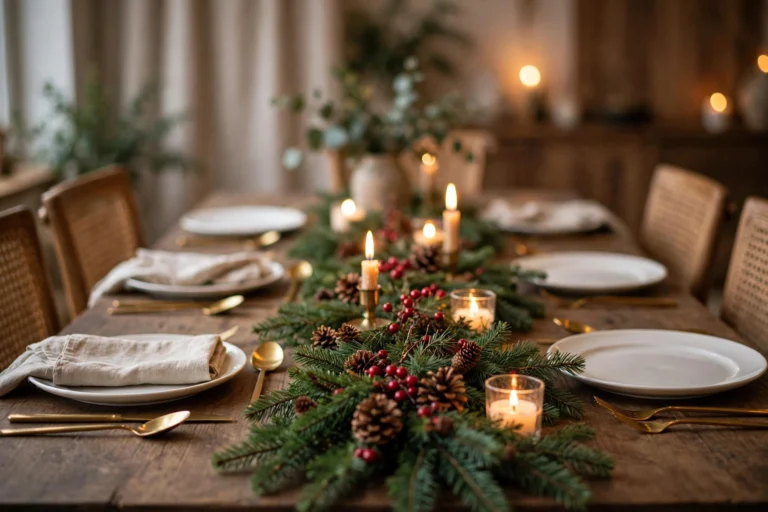
Start with a garland that matches the table length, then let the ends trail slightly over the edges for an abundant look. A faux cedar or pine garland works best here, because it lies flat and does not shed needles onto plates. Fluff the branches outward so the runner looks wide and full, then weave in a strand of warm white lights and a few small ornaments in your table colours.
Keep the centre low. Guests need to see each other across the table, so save tall candlesticks for the sideboard and use short votives or a few LED pillar candles nestled into the greenery instead. Tuck in pinecones, a few dried orange slices, or a scattering of metallic baubles to finish the look. If the table is round, coil the garland into a loose wreath shape in the centre and set a candle cluster inside it.
One practical tip: lay a thin table runner or a strip of linen under the garland first. It protects the wood from sap and moisture, and it gives you a clean edge to lift the whole arrangement away when the meal is over.
7. Garland Above Kitchen Cabinets and Around Windows
The kitchen is the room most people forget to decorate, and garland is the easiest fix. A strand along the top of the cabinets adds instant Christmas feeling to a room that already smells of baking, and it takes ten minutes to put up. The same trick works above a window, where the greenery frames the view and catches the light.
For cabinets, choose a lightweight faux garland and secure it with clear adhesive hooks along the top edge. Let it drape slightly over the front, and weave in a battery light strand so the top of the cabinets glows in the evening. Add a few small ornaments or dried orange slices, but keep it simple, because kitchen grease and steam will settle on anything too fussy.
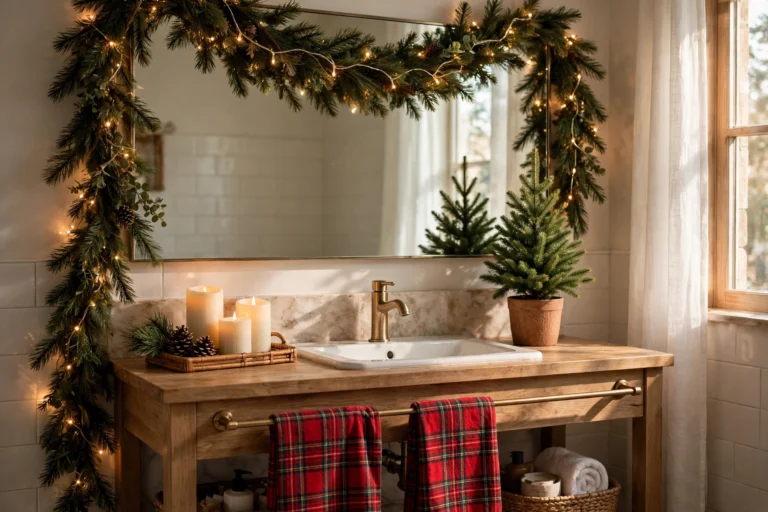
Around a window, measure the frame and add at least four feet onto the measurement, two for each side, so the garland drapes over the corners instead of stopping short. A thin garland works better than a thick one here, because a heavy strand can block light. Cedar or eucalyptus both suit windows, and a strand of dried orange slices threaded through adds a warm, homemade note.
If your kitchen has open shelving, run a short garland along the shelf edge and tuck in a few small jars of cinnamon sticks or a row of tiny pinecones. It is a small gesture, but it makes the whole room feel considered rather than decorated as an afterthought.
8. Outdoor Garland for the Front Door and Porch
Outdoor garland is what makes the house feel festive from the street, and it is more forgiving than most people expect. A garland around the front door frame, along the porch rail, or draped over a fence turns an ordinary entrance into a welcome, and it photographs beautifully for holiday cards.
Start with a weatherproof garland. Faux pine and cedar hold up best outdoors, while fresh greenery needs regular misting and fades faster in sun and wind. For a standard door, plan nine to twelve feet of garland to frame the top and both sides. Start at the top centre and work down both sides for symmetry, or cascade one side only for drama. Secure it with garland hangers that grip the frame without tools, or tie it with twine to hooks you already have.
For a porch rail or fence, plan about one and a half feet of garland for every foot of rail, so there is enough slack to create an even swag. Add a red bow at the top of each swag for the classic look, or use burgundy ribbon for the fresher 2026 colour story. Battery operated lights are the practical choice outdoors, because you avoid running extension cords across a walkway.
Finish the porch with a matching Christmas wreath on the door and a pair of lanterns by the steps, and the garland becomes part of a whole entrance rather than a lone strand. When the season ends, brush off any debris, fold the garland loosely, and store it in a dry bag so it is ready for next year.
How Much Garland You Need: A Simple Length Guide
Buying the wrong length is the most common garland mistake, so measure before you shop. The rule is simple: measure the space, then add extra for swag and drape. A garland pulled tight looks thin and tired, while one with slack looks lush and generous.
For a fireplace mantel, measure the width and add at least four feet, two for each side, so the garland drapes over the corners. For a staircase banister, allow one strand per three feet of rail, plus one extra strand. For a front door frame, nine to twelve feet covers a standard door. For a fence or porch rail, allow one and a half feet of garland for every foot of rail. For a dining table, choose a garland the length of the table plus a little extra to trail over the ends.
Fluff every branch tip out and up before you hang the garland, one at a time. It takes a few minutes, but it doubles the apparent fullness. And always hang the lights first, before the ornaments and ribbon, so the wire hides inside the greenery instead of sitting on top of it.
Conclusion
Christmas garland is the hardest working decoration in the house. One strand dresses a mantel, softens a staircase, frames a doorway, and dresses a table, and it does all of that for the price of a single decoration. Start with one spot, the mantel or the front door, and see how the house changes. Then add a second strand where the eye asks for more.
The best garland is the one that fits your home and your budget. Fresh cedar smells wonderful and costs little, faux flocked garland lasts for years, and a handmade dried orange strand costs almost nothing at all. Pick the style that makes you smile when you walk into the room, hang it with a little slack, add warm light, and let the greenery do the rest. Your home will feel festive from the first week of December right through to Christmas morning.