Christmas Wreath Ideas That Make the Door Feel Like December
A wreath is the fastest Christmas change you can make to a home. It takes one hook, one afternoon at most and a door that was plain yesterday suddenly looks like December has arrived. Guests see it before they see anything, neighbours see it from the street and you see it every time you come home with shopping bags in both hands. That is a lot of work for one circle of greenery which is why it is worth choosing well instead of grabbing the first one on the shelf.
The mistake most people make is treating a wreath as a single decoration. It is really a system: size, base, colour, light and the way it hangs. Get those five right. Almost any style works, from a plain evergreen ring, to a bold bauble wreath that looks like it escaped from a Christmas shop window. Get the size wrong and even the prettiest wreath looks lost on a wide door or crowded on a narrow one.
This guide walks through the system in order with real measurements, honest costs and DIY Christmas wreath ideas that a beginner can finish in one afternoon. Pick one look or mix two and your door will be ready before the first carol plays.
1. Pick the Right Size Before You Buy Anything
Size is the one thing you cannot fix after you hang a wreath. A ring that is too small floats in the middle of the door like a lost ornament. A ring that is too big crowds the edges and bumps the frame every time the door opens. Measure first, buy second. The rest of the styling gets much easier.
A standard front door is about 36 inches wide. For that door a wreath between 24 and 30 inches across looks balanced, with 26 inches a safe middle choice for most homes. A narrow side door or a flat door around 30 to 32 inches wide suits a 20 to 24 inch wreath. A double door or a tall door over 7 feet high can carry a 30 to 36 inch wreath without looking small. The simple rule is that the wreath should fill about half to two thirds of the width of the door, never more and never less than a third.
Height matters too. Hang the wreath so its centre sits at about eye level, roughly 57 to 60 inches from the ground or just above the middle of the door. A wreath hung too high looks like it is trying to escape and one hung too low gets knocked by bags and elbows. If your door has a window or a letterbox in the upper half centre the wreath on the solid panel below it instead of fighting the glass.
Measure the door before you shop and write the number on your phone. Shops sell wreaths in 18, 20, 24, 26, 30 and 36 inch sizes. The difference between 24 and 30 inches is bigger than it sounds once it is on the door. If you are making your own the same sizes apply: pick a wire frame or grapevine base in the size your door needs, not the size that happens to be on sale.
2. Choose a Base That Suits Your Door
Every wreath comes from a base. The base tells how much work the rest of the wreath will need. There are four bases and each base matches a different style and a different level of patience.
A grapevine base is the easiest starting point for a DIY Christmas wreath. The grapevine wreath already has texture so you only need to add a few pieces before the wreath looks finished. Tuck in pine stems, red berries, pinecones and a ribbon and the woven vines do the rest. The grapevine wreath is light, cheap and forgiving which makes it the best base for a first homemade wreath. The grapevine wreath also suits rustic and farmhouse looks better than any other base.
A wire frame is the best choice for a full evergreen wreath. Wire pine, fir or cedar stems onto the wire frame in overlapping layers until the wreath looks thick and lush then fluff the branches outward. The wreath takes longer than a grapevine wreath, about an hour for a 24 inch ring, but the wreath looks like a shop bought wreath and lasts for years if the wreath is stored well. Wire frames also let you control the shape so you can build an asymmetrical wreath with more greenery on one side.
A foam ring works well for ornament and bauble wreaths because glue and pins hold firmly in the foam. Cover the ring first with ribbon or fabric so no pale foam shows through the gaps then attach ornaments in clusters of three. The foam wreath is light and easy to hang. The foam wreath does not suit outdoor use in wet weather so keep a foam wreath on a covered porch or indoors.
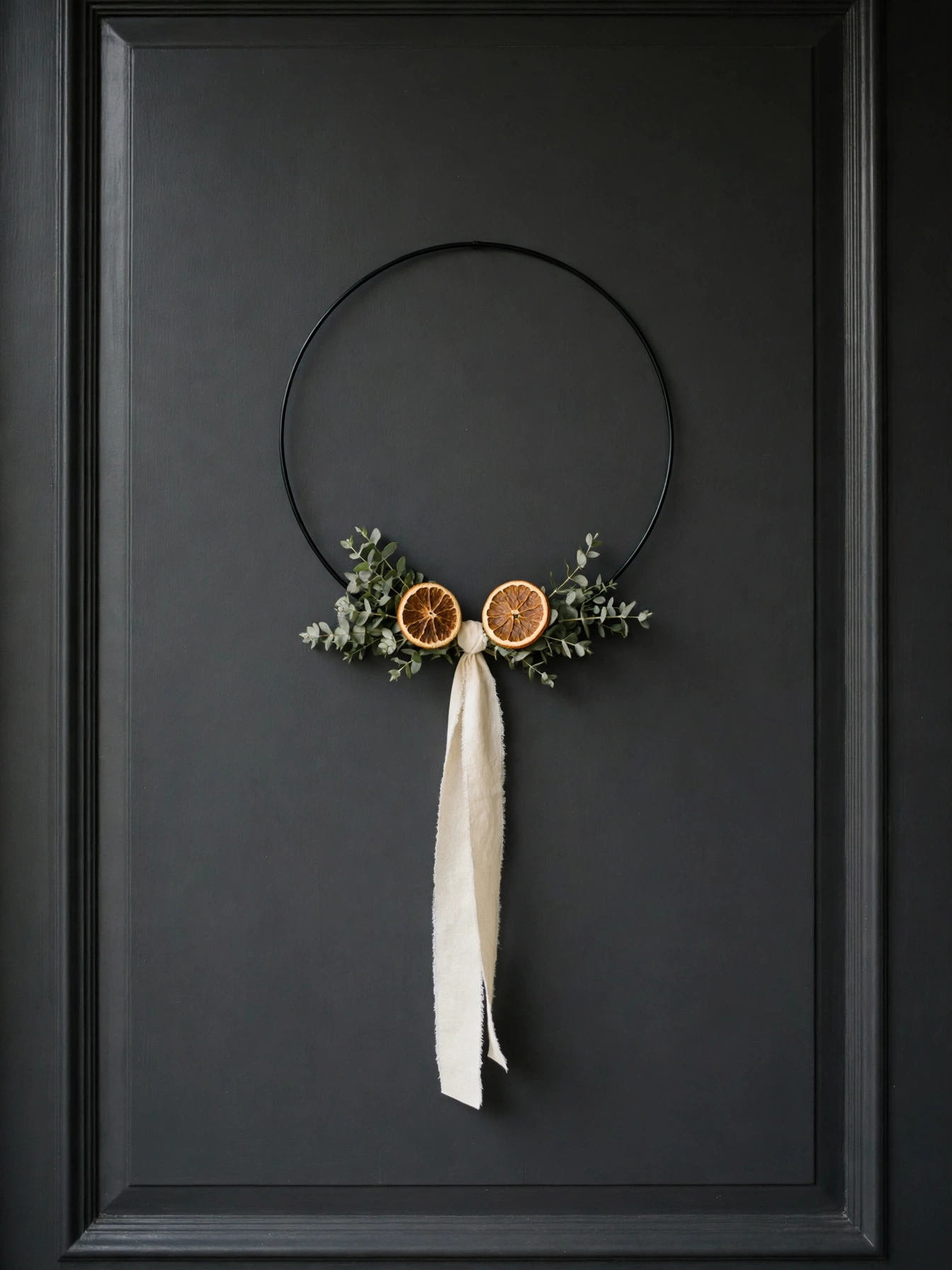
A hoop base, usually a metal ring or an embroidery hoop, is the choice for a modern, minimal wreath. Decorate only part of the hoop, often the lower third, and leave the rest bare. The hoop wreath with a small cluster of eucalyptus, a few dried oranges and one long ribbon tail looks calm and intentional and it costs very little because the hoop wreath uses so few materials. The hoop wreath suits dark doors and modern homes especially well.
If you are buying a ready made wreath instead of making one the same thinking applies. Look at the base before you look at the decorations. A full, well shaped base with no bare patches is worth more than a thin base covered in glitter. Fluff every branch outward, for ten minutes after you take the wreath out of the box. That one step makes a budget wreath look twice as expensive.
3. The Classic Evergreen Wreath, Done Well
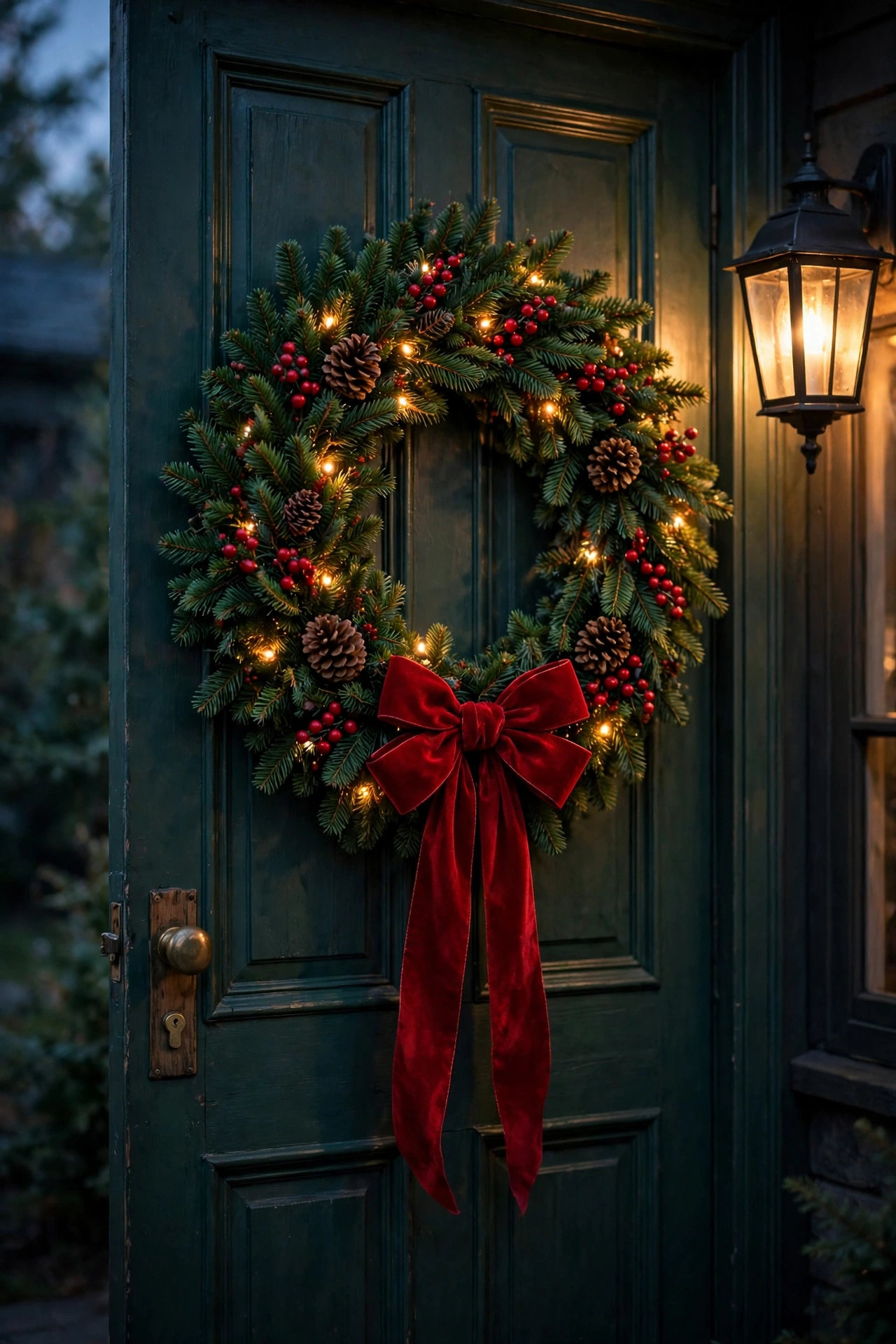
The classic evergreen wreath never goes out of style. It is the shape most people picture when they hear the word Christmas. Deep green pine or fir, a red ribbon, a few pinecones and warm light. The wreath works on every door in every neighbourhood. It photographs beautifully in daylight and at dusk.
Start with a full base, real or faux. A real noble fir or cedar wreath smells wonderful and looks soft in a way plastic never quite manages. However, the real wreath dries out, drops needles and needs replacing every year. A decent faux wreath costs about the same as one season of real greenery and lasts for years. Many homes now use a faux base and tuck a few real branches into it for the scent, which gives the best of both.
Layer the greenery if the wreath base looks thin. Two thin garlands or a few extra stems twisted into the wreath ring make it look lush without buying a new wreath. Mix textures: soft pine as the base then a few cedar or eucalyptus stems for a different shade of green and a little berry spray for colour. Mixing these elements stops the wreath from looking flat and one note.
Add the ribbon last, not first. A wide velvet ribbon in red, plaid or deep green, tied in a generous bow at the top or the bottom of the wreath ring, finishes the look. Let the tails hang long, about 12 to 18 inches, so they move slightly in the breeze. A bow that is too small looks like an afterthought, so make it bigger than you think it needs to be, then step back and check it from the street.
Warm white fairy lights woven deep into the greenery turn a daytime wreath into an evening one. Use battery lights with a timer, about 40 small LEDs for a 24 inch wreath, and hide the battery pack behind the ring or inside a small pouch. The timer matters more than the lights themselves: six hours on and eighteen hours off means the wreath glows every evening without you remembering to switch it on.
4. Dried Orange, Cinnamon and Natural Wreaths
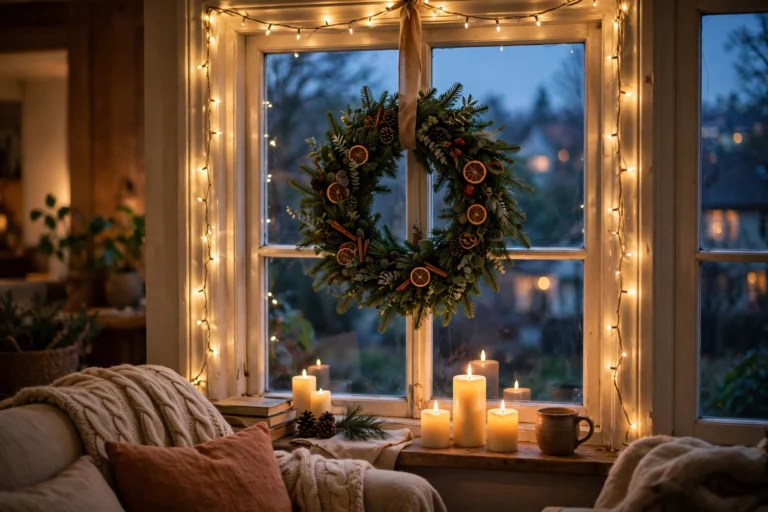
If the classic evergreen look feels too familiar the natural wreath made from dried fruit, spices and foraged greenery is the most charming alternative and it is also one of the cheapest to make. The dried orange slices glow like stained glass when the light hits them. Cinnamon sticks add scent and a warm brown tone. Pinecones give texture that no shop decoration can match.
Dry the orange slices yourself to keep the cost down. Slice oranges about a quarter inch thick, lay them on a baking tray lined with paper and bake at a low heat, around 200 degrees Fahrenheit, for two to three hours, turning them once halfway through. They are ready when they feel dry and slightly stiff, with no soft spots. Let them cool completely before you use them and seal them with a light coat of clear acrylic spray if the natural wreath will hang outside in damp weather.
Attach the larger pieces first. Hot glue the orange slices, pinecones and cinnamon stick bundles onto the base in a loose, random pattern, spacing them around the ring so no two large pieces sit side by side. Then fill the gaps with small sprigs of cedar, eucalyptus or rosemary. The greenery should look like it grew around the fruit, not like it was glued on as an afterthought.
A natural wreath suits a plain ribbon best: a simple jute twine bow, a strip of linen or a narrow velvet ribbon in rust or deep green. Avoid glitter and bright baubles here because they fight the quiet, earthy palette. The whole point of this style is that it looks gathered, not bought.
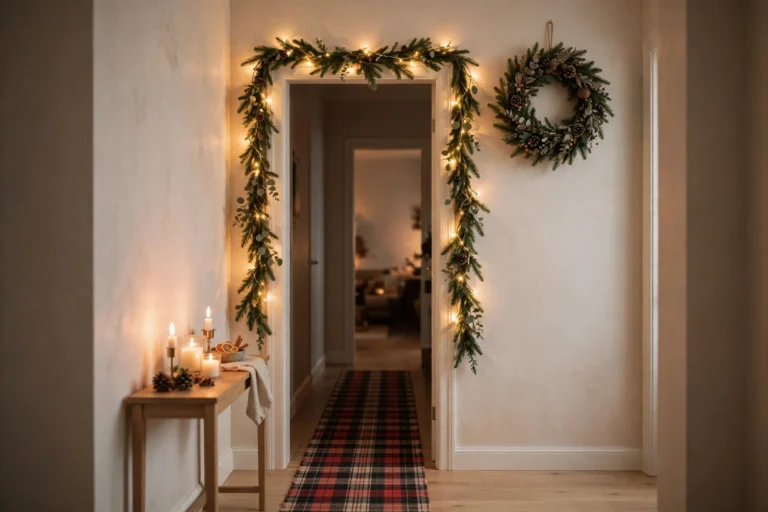
Hang a natural wreath where it gets some shelter from rain. A covered porch is ideal. Indoors, the natural wreath works beautifully on a hallway wall, above a console, or on an interior door, where the scent of orange and cinnamon fills the room every time someone passes. The natural wreath will last the whole season if it stays dry and the oranges darken to a deeper amber as December goes on, which only makes it prettier.

5. Ornament and Bauble Wreaths for Colour
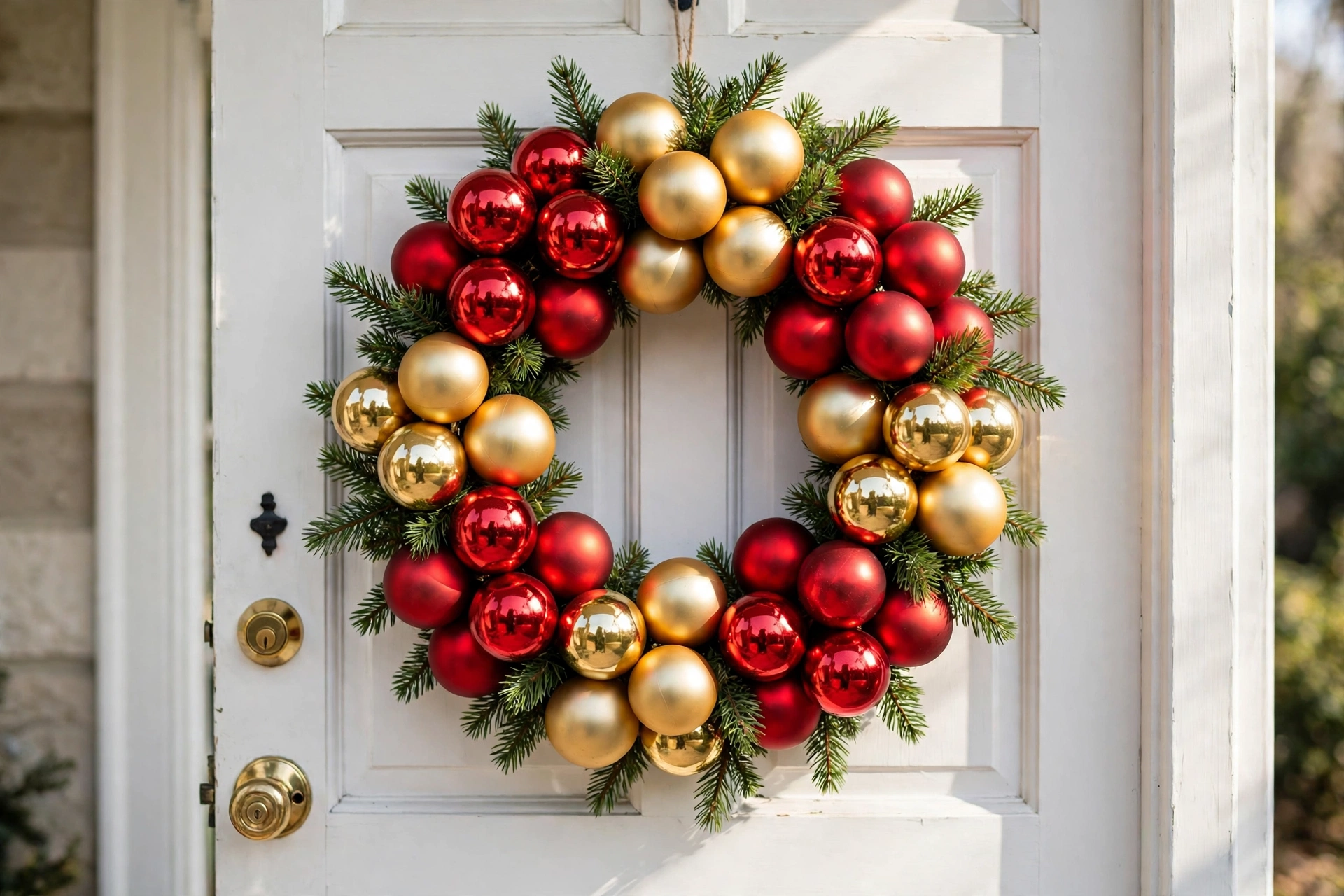
If you want the door to shine brightest on the street, an ornament wreath is the answer. Baubles in one colour family, clustered tightly on a foam or wire base, catch the light and read as pure celebration. This is also the best use for the box of spare ornaments every home seems to collect: the ones that do not match the tree any more, the singles left over from broken sets, the colours you bought on sale and never used.
Choose one colour story before you begin. Red and gold is the classic choice and suits traditional homes. Silver and white reads icy and elegant. Jewel tones, emerald, burgundy and navy with gold, look rich against a dark door. Pink and rose gold stay chic when you mix them with cream and keep silver out of the palette. One colour family, repeated in three finishes, glossy, matte and glitter, looks far more expensive than a random mix of every colour you own.
Build in clusters of three. Glue or wire three ornaments of different sizes together then attach the cluster to the base, working your way around the ring. Fill the gaps with smaller ornaments then tuck in a little greenery or ribbon so no bare base shows. The clusters give the wreath its shape: a ring of single ornaments glued in a row looks flat, while clusters give it depth and a handmade feel.
Keep the weight in mind. A bauble wreath is heavier than a greenery wreath, sometimes twice as heavy, so it needs a stronger hook and a hanger rated for the weight. Test the hanger before you hang the wreath on the door and check it again after a day, because a wreath that slides down overnight leaves a mark on the paint.
An ornament wreath works best on a covered porch or indoors. Rain and frost can dull the finish on cheaper baubles, and wind can knock loose any ornament that is only glued at one point. If it must hang on an exposed door, wire every ornament on, not just glue, and bring it inside during a storm.
6. Minimal and Modern Wreaths
Not every home wants a full, traditional wreath. Modern doors, dark paint, glass panels and clean lines all suit a quieter wreath, and the minimal look is also the fastest and cheapest to make. The rule for a modern wreath is simple: one idea, done well, with plenty of empty space.
A hoop wreath is the easiest modern style. Take a plain metal or wooden hoop, 18 to 24 inches across, and decorate only the bottom third. A small bunch of eucalyptus, two or three dried orange slices, and a single long ribbon tail are enough. The bare hoop above the cluster is part of the design, not a gap to fill. Hang it with a thin ribbon looped over the top of the hoop, and let the hoop itself frame the door behind it.
A wooden bead wreath is another calm option. String large wooden beads onto a wire frame, add a small sprig of greenery and a linen bow, and you have a wreath that suits a Scandinavian or farmhouse interior. It is light, it never sheds, and it stores flat in a box for next year.
A single colour wreath also reads as modern. All white or all green, with texture doing the work instead of colour. White ceramic houses, paper stars, or frosted pinecones on a pale green base look soft and intentional, and they suit rooms that already lean light and neutral. Keep metal to one finish, matte black or brushed nickel, so the palette stays calm.
The mistake to avoid with a minimal wreath is adding one more thing. Step back after every piece you add and ask whether the wreath needs it or whether you are adding it out of habit. A minimal wreath with three elements looks designed. The same wreath with eight elements looks unfinished, because the eye cannot tell which piece matters.
7. Hang It Without Damaging the Door
A beautiful wreath hung badly is worse than no wreath at all. It slides, it scratches the paint, it bangs in the wind, and it has to be rehung every other day. The hanging method matters as much as the wreath itself, and the right method depends on your door.
An over the door hanger is the simplest option for most front doors. It is a flat metal hook that slides over the top of the door and holds the wreath at the right height, with no holes and no adhesive. Choose one that matches the thickness of your door, and put a small felt pad behind the hook where it touches the door, so it does not scratch the paint. Over the door hangers also work on interior doors, which makes them the best choice for a hallway wreath.
A suction hook or a magnetic hook suits a glass door or a metal door. Suction hooks need a clean, smooth surface, so wash the glass first and let it dry. Magnetic hooks work on steel doors and hold surprising weight, often more than a suction hook, but test them with the wreath before you trust them overnight. A wreath that falls at 2 in the morning is a bad way to learn the weight limit.
A removable adhesive hook is the right choice for a rented home or a painted door you do not want to mark. Use one rated for at least twice the weight of your wreath, stick it to a clean, dry surface, and wait the full hour the packet asks for before you hang anything on it. The hour matters: adhesive that has not cured will let go on the first cold night.
For a storm door or a door with a window, hang the wreath on the inside of the glass instead. It is protected from the weather, it still shows through the glass, and it never gets wet. Use a suction hook on the inside of the glass, and keep the ribbon short so the wreath does not swing against the pane.
Whatever method you use, protect the door behind the wreath. A small square of felt, a strip of clear bumper, or a piece of soft cloth between the wreath and the paint stops scratches and stops the wreath sticking to fresh paint on a warm day. Check the wreath after the first windy night, and tighten or adjust the hanger before the next one.
8. Keep It Fresh and Looking Good All December
A wreath is not a hang it and forget it decoration, especially a real one. A little care each week keeps it looking fresh from the first weekend of December until the new year, and the care takes less than five minutes.
Mist a real greenery wreath with water every two or three days, focusing on the back of the branches where the cut stems are. Keep it out of direct sun and away from heating vents, because heat and sun dry it out faster than cold does. A wreath on a shaded north facing door will last weeks longer than one on a sunny south facing door. If the wreath starts to drop needles heavily, it is telling you it is thirsty or too warm, so move it to a cooler spot or bring it indoors.
Fluff a faux wreath once a week. Branches settle and flatten, especially after wind or rain, and five minutes of bending the branch tips outward and upward brings back the full shape. Check the battery pack on pre lit wreaths at the same time, and swap the batteries before they die completely, because a half lit wreath looks worse than an unlit one.
Store the wreath properly when the season ends, and it will look just as good next year. A wreath storage bag or a large box with tissue paper between the layers stops the branches crushing each other. Hang the bag on a hook in a dry cupboard rather than stacking heavy boxes on top of it. Label the bag with the size and the style, so next December you can find the right wreath without opening every box in the loft.
If a wreath does start to look tired before Christmas, do not throw it away. Add one fresh element, a new ribbon, a few fresh sprigs tucked into the gaps, or a cluster of new ornaments, and it will look styled again. A wreath is a base, not a finished object, and refreshing it mid season is part of the fun, not a sign that you did it wrong.
A wreath earns its place on the door because it does so much with so little. It greets guests, it marks the season, and it tells the street that someone inside cares about the details. The ideas in this guide all follow the same simple system: the right size for the door, a base that suits the style, one clear colour story, and a hanger that holds. Once those are in place, the rest is personal taste, and personal taste is exactly what makes a wreath feel like yours instead of a shop display.
Start with the door, not the shop. Measure it, choose a size, and pick one look from this guide, classic evergreen, natural dried orange, bold baubles, or quiet minimal. Make it or buy it, hang it safely, and step back to the street to see it the way your neighbours will. If it makes you smile on a cold evening when the lights come on, it is right. That is the only test that matters, and it is the reason the wreath has stayed at the centre of Christmas decorating for so long.
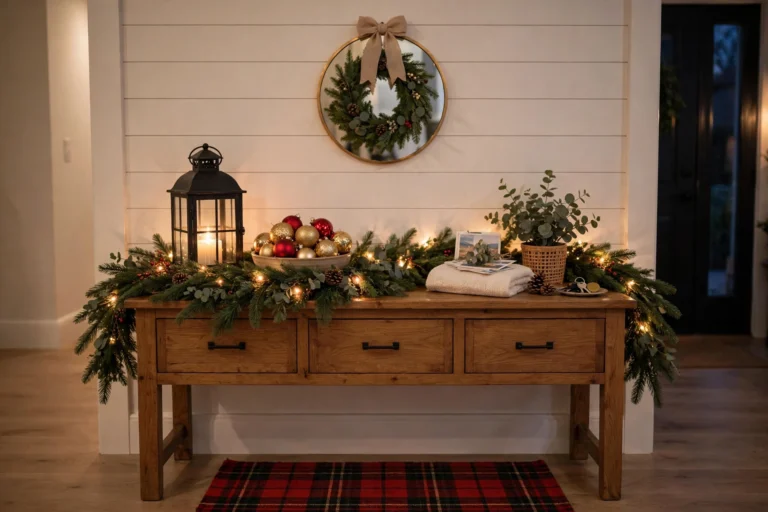
If the door is done and you want the rest of the entrance to match, our front porch guide shows how to build the whole porch around the wreath, with garland, lanterns and planters that survive real weather. Our entryway guide carries the same welcome inside, with a garland console and warm light. And if the wreath has made you want greenery deeper into the house, our hallway guide shows how to run garland and light along the walkway without blocking a single step. One wreath, well chosen, is often the start of the whole house feeling like Christmas.