Christmas Living Room Decor Ideas That Feel Warm and Lived In
The living room carries Christmas in most homes. It is where the tree stands, where gifts pile up on Christmas morning, and where everyone ends up after dinner, whether you planned it or not. That is why decorating it feels like a bigger job than decorating any other room. Every choice shows, and every extra item competes for the same chairs, tables, and floor space.
The good news is that a warm Christmas living room does not need a full redesign or a large budget. It needs a clear order: pick one palette, place the tree where it can be seen without blocking the room, layer warm light at different heights, and then dress only the surfaces people actually look at. Everything else is optional, and optional is fine to skip.
This guide follows that order. It starts with colour, moves through the tree, light, sofa, and coffee table, then covers small rooms, rooms without a fireplace, and the daily life test that keeps a decorated room comfortable all December. Each section ends with a simple rule you can use right away, even if you only have one evening to decorate.
1. Start With One Palette, Then Repeat It
A living room feels calm at Christmas when the eye can rest on a repeated colour story. Pick three colours at most, and let one of them do most of the work. Classic red, deep green, and warm cream is the safest combination, because it suits wood furniture, plain walls, and most existing sofas. Warm earth tones, such as terracotta, rust, and sage with warm cream, give a quieter 2026 look that still feels festive. White, warm gold, and light oak suit bright rooms and small spaces, because they bounce light instead of absorbing it.
Once you have the palette, repeat it in at least three places. If the tree uses red ribbon and gold ornaments, use the same red on a cushion and the same gold on a candle holder or a picture frame bow. If the room uses earth tones, carry the same terracotta through a throw, a vase, and the wrapping paper. Repetition is what makes separate purchases look like one plan.
The mistake to avoid is introducing a new colour on every surface. A blue cushion here, a silver garland there, and a pink throw on the chair will each look fine alone, but together they make the room feel busy. When you are tempted by a fourth colour, ask whether it already appears somewhere else in the room. If it does not, leave it in the shop.
Rule: three colours, repeated in three places, and nothing new after that.
2. Place the Tree First, Then Decorate Around It
The tree is the largest Christmas object in the room, so it should be put in place before anything else. Step into the doorway and look at the room as a guest would. The best spot is usually a corner that can be seen from the main seating, but that does not block a walkway, a radiator, or the television for everyone. A corner next to the sofa often works better than a spot in front of a window, because the window spot can block daylight and make the room feel darker during the day.
Size matters more than fullness. For a standard ceiling, a six to seven foot tree suits most living rooms. In a small room, a slim pencil tree gives good height with a footprint often under twenty inches wide, and it tucks into a dead corner beside the sofa where nothing else fits. A tabletop tree works on a sideboard or a sturdy console when floor space is truly tight, and it still gives children and guests a tree to gather around.
Once the tree is placed, decorate it in order: lights deep inside the branches first, then one ribbon repeated, then large ornaments deepest and first, then medium and small ornaments last. This order is covered in detail in the Christmas tree guide, and it is worth following here too, because lights placed last always sit on the surface and look flat. Leave a clear circle around the base for gifts, and keep the tree skirt flat so nobody trips over a folded edge.
Rule: tree first, in a seen corner, with a clear walkway and a flat skirt.
3. Layer Warm Light at Three Heights
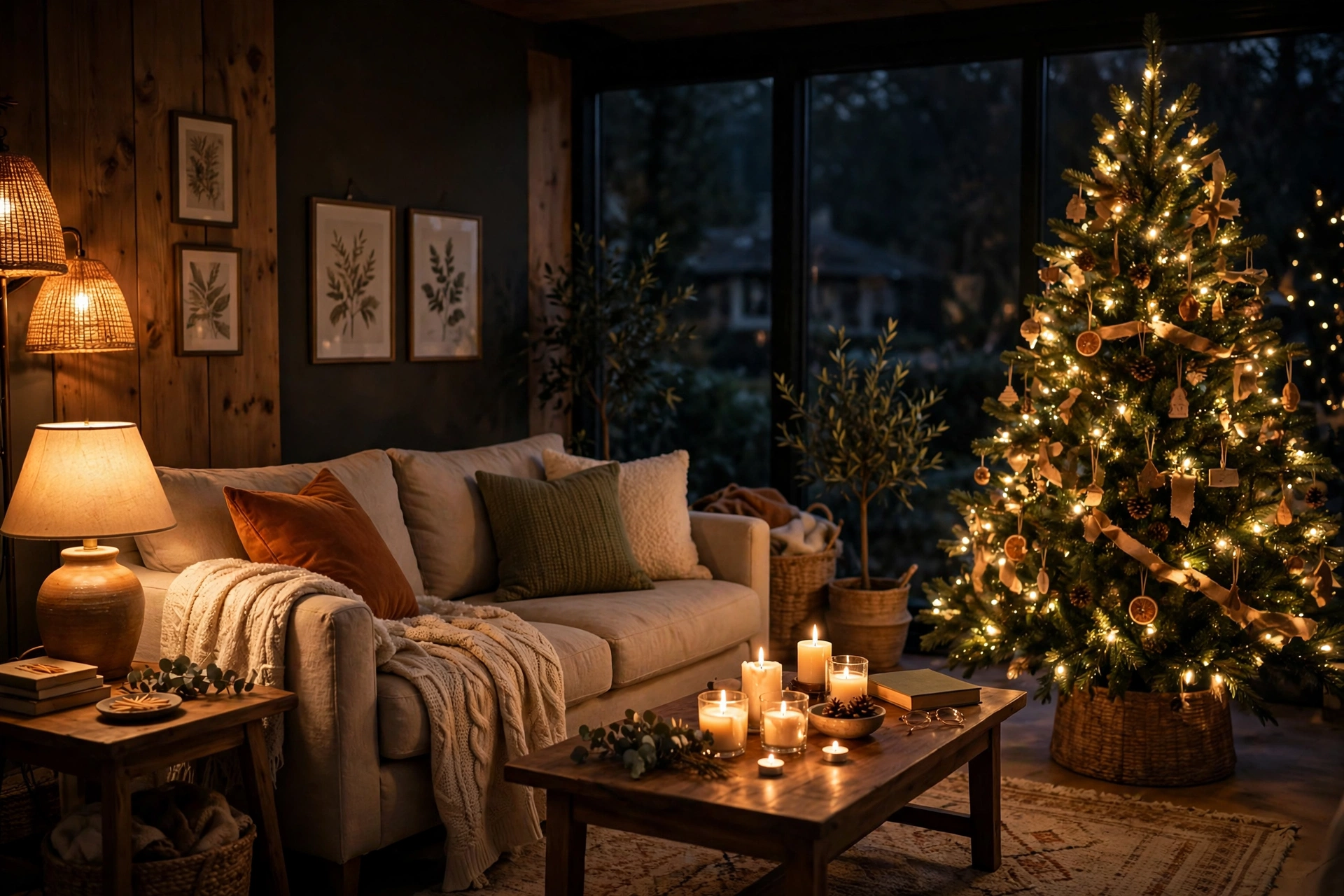
If a living room feels flat on a dark December evening, the problem is usually light, not decor. One ceiling light makes everything look harsh, and one strand of tree lights leaves the rest of the room in shadow. The fix is three layers of warm light: low, middle, and high.
Low light comes from candles and fairy lights in jars on the coffee table or the sideboard. Use battery candles near greenery, curtains, and anything a child or pet could reach, and save real flames for a supervised dinner table only. Middle light comes from table lamps and floor lamps fitted with warm white bulbs around 2700K, which keeps skin tones and cream fabrics looking soft. High light comes from the tree itself and from a garland or a wreath with lights above eye level.
Timers make the whole system easy. Set the tree lights, the garland lights, and one lamp to switch on as daylight fades, and the room will look finished every evening without anyone remembering to switch things on. Keep every light warm white, because one cool white strand beside warm strands will stand out and make the rest look yellow by comparison.
Rule: low, middle, and high, all warm white, on timers where possible.
4. Dress the Sofa in Layers, Not in Clutter
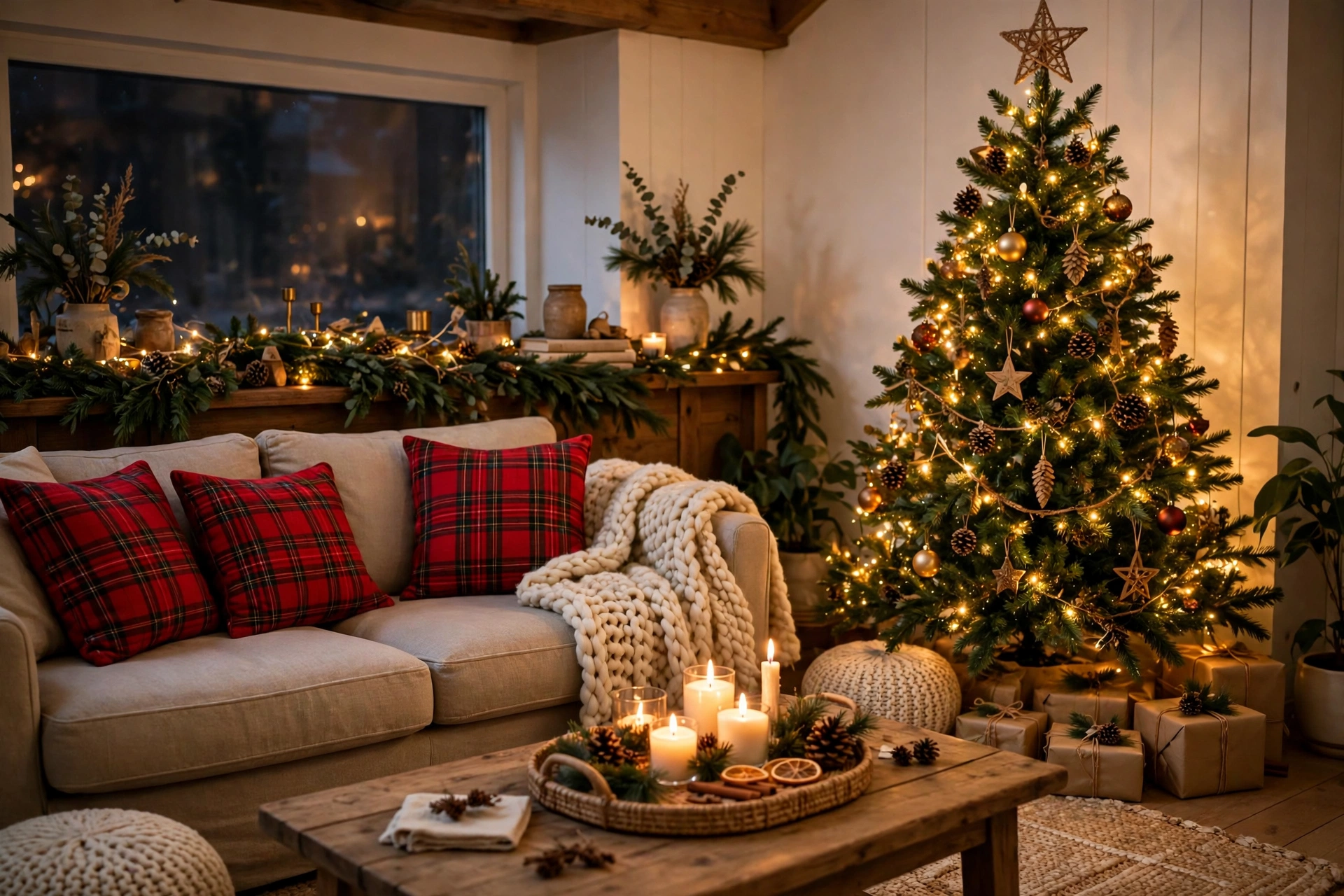
The sofa is the place people actually sit, so its Christmas dressing should add comfort first and decoration second. Start with what is already there. If the sofa has plain cushions, swap two covers for festive ones in your palette, and leave the rest alone. A chunky knit throw draped over one arm, not spread across the whole seat, adds warmth without making sitting awkward.
Plaid works well on a sofa because it reads as Christmas without needing any other theme. One plaid throw or two plaid cushion covers are enough. Velvet cushion covers in deep green or burgundy add a richer texture for evening gatherings, and they pair well with a plain knit throw. Avoid covering every cushion, because a sofa full of decorative cushions ends up with cushions piled on the floor by the second evening, and that pile is the first thing guests notice.
For families, choose washable covers and a throw that can survive hot chocolate. For a formal sitting room that is used less often, a velvet throw and a single festive cushion can be enough. In both cases, test the sofa by sitting on it. If you have to move three things before you can sit down, remove two of them.
Rule: two festive cushions, one throw, and a seat that is ready without moving anything.
5. Style the Coffee Table So It Still Works
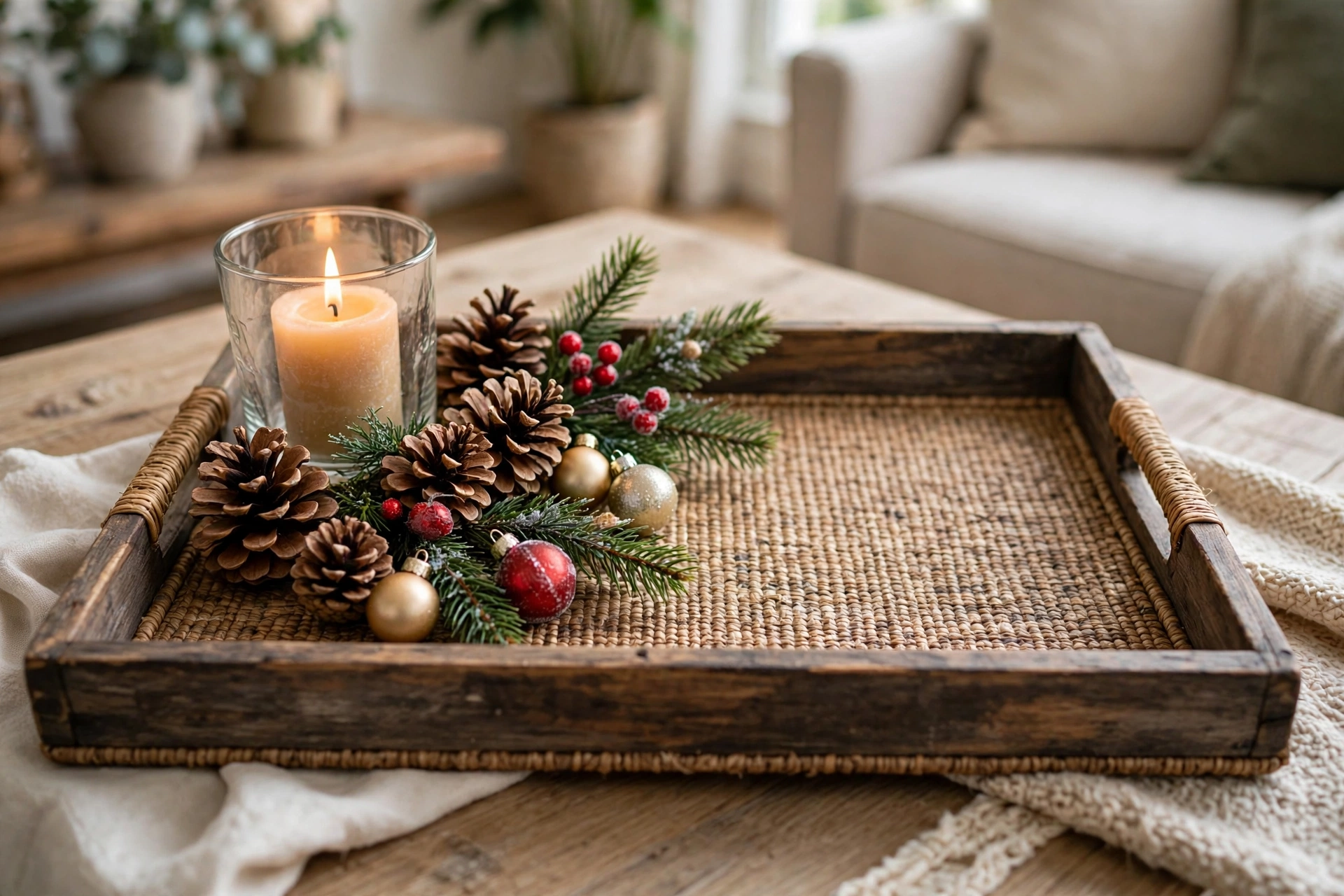
The coffee table is the toughest surface in a Christmas living room, because it has to look festive and still hold drinks, remote controls, and a book. The solution is one tray. Put a low tray in the centre of the table, and build a small vignette inside it: a candle in a glass holder, a few pinecones or small ornaments, and a sprig of greenery. Everything inside the tray lifts away in one move when guests arrive with food or drinks, and it goes back just as easily.
Keep the rest of the table clear. A stack of two books with a small ornament on top is plenty beside the tray. A tall centrepiece on a coffee table blocks conversation across the sofa, and a wide garland across the table leaves nowhere to set a mug. If the table is small, skip the tray and use a single candle cluster at one end, leaving the other end free.
The same tray idea works on a sideboard or an ottoman. The point is not the tray itself, it is the boundary. When decor has a clear edge, it looks intentional. When it spreads across the whole surface, it looks like clutter, even when every item is beautiful.
Rule: one tray, one vignette, and the rest of the table free for real life.
6. Small Living Room Christmas Decor That Stays Calm
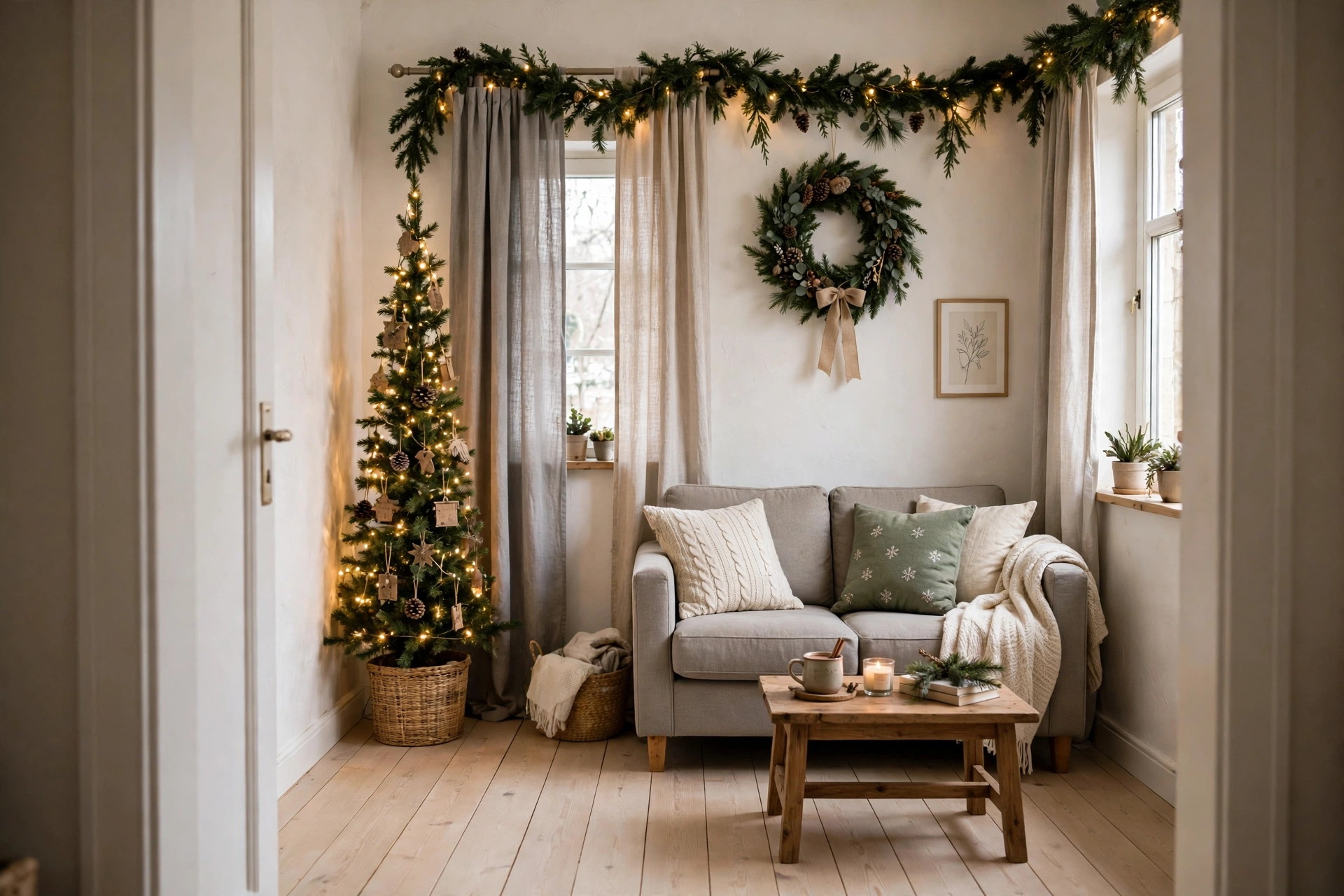
A small living room is simpler to decorate than a large one, provided you respect its size. The rules are simple: decorate up, not out. Use the walls, the window frame, and the top of a bookshelf, and keep the floor as clear as possible. A wreath on the wall, a garland along a curtain rod, and lights on a shelf give a festive room without taking a single inch of floor.
Choose a slim tree or a tabletop tree, as described above, and pick one focal point. In a small room, the tree is usually enough. Adding a second large focal point, such as a fully dressed mantel and a large floor arrangement, will crowd the room. Instead, add small repeats of the palette: a cushion, a throw, and the wrapping paper under the tree.
Mirrors help in a small room, because a mirror opposite the tree doubles the twinkle and makes the room feel larger. Hang a mirror or lean a large mirror where it reflects the tree lights, not where it reflects clutter. Keep walkways clear, keep cords behind furniture, and keep the coffee table rule from the previous section. A small room that follows these rules feels cosy, not cramped.
Rule: up, not out, one focal point, and a clear floor.
7. No Fireplace, No Problem: Build a Focal Point Elsewhere
Many living rooms have no fireplace, and that is not a disadvantage. A fireplace is only one kind of focal point. A tree in a corner, a console dressed with a garland and candles, or a bookshelf styled with greenery and lights can all anchor the room just as well.
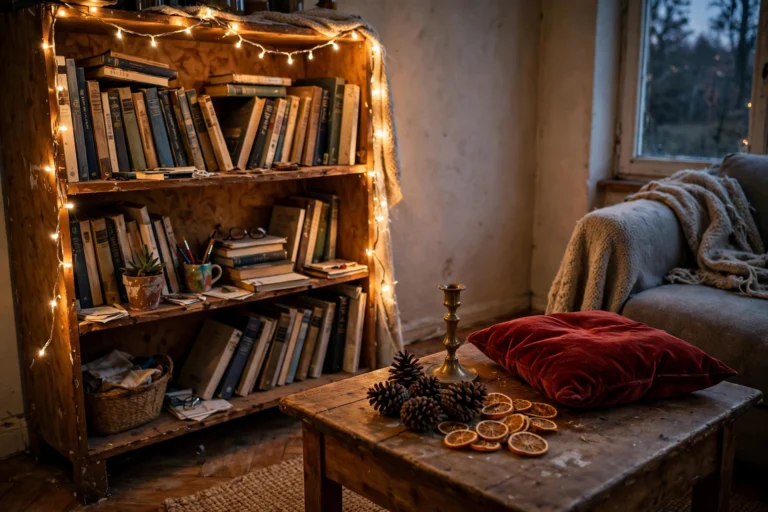
If you have a console or sideboard, dress it like a mantel: a garland along the back edge, two candle holders of different heights at one end, and a small arrangement at the other end, with the middle left simple. If you have a bookshelf, add greenery to the top shelf, warm lights along one shelf, and a few ornaments among the books, but leave most books in place so the shelf still looks like a shelf.
For a room with a television as the main wall feature, do not fight it. Dress the wall beside the television, not above it, with a wreath or a framed piece of festive art, and let the tree carry the main decoration. A garland draped over the television looks messy and blocks the screen, so keep that wall simple and put the effort where guests look when they are not watching television.
Rule: one clear focal point, built on furniture you already own, not on a fireplace you do not have.
8. The Daily Life Test: Keep the Room Usable All December
A Christmas living room has to survive four weeks of everyday life, not just one photo. Before you call the decorating finished, run a daily life test. Sit in every seat, walk every path to the kitchen and the door, open the curtains, switch on the lamps, and put a mug down where you normally would. If any step needs moving decor, change the decor, not the habit.
Check the practical details. Cords should run behind furniture, never across a walkway. Battery lights should have spare batteries in a drawer, not hidden in a box in the attic. Fragile ornaments should sit above the reach of small children and pets, and shatterproof ornaments should go on the lower branches. A scented candle should never sit beside curtains, greenery, or wrapping paper.
Finally, plan the January exit while you decorate. Note where each item came from, keep the boxes for fragile pieces, and store the living room decor together in one labelled box. The calm January reset is much easier when December decorating had a plan, and the room will feel festive again next year without a fresh shopping trip.
Rule: if daily life has to move around the decor, the decor is in the wrong place.
Conclusion
A warm Christmas living room comes from being organised, not from having lots of stuff. One palette repeated in three places, a tree placed where it can be seen, warm light at three heights, a sofa dressed for sitting, a coffee table that still works, and one clear focal point will do more than a room full of separate purchases. Small rooms and rooms without a fireplace need the same order, only edited harder.
Start with the palette and the tree, add light, and then stop when the room feels finished. If you are unsure whether to add one more item, leave it out for a night. A room that feels calm in the warm light of the evening is finished, even if a shop shelf still holds something pretty. That calm, lived in feeling is what guests remember, and it is what makes the room easy to enjoy all December long.
More Christmas ideas: Christmas Home Office Decor Ideas.